Am I Too Old to Become a Nurse? What Second-Career Students Should Know
This article is sponsored by Herzing University. Nurse.org received compensation to publish this content. The product recommendations, claims, and views expressed are the sponsor’s. Sponsored content is held to Nurse.org’s advertising standards, and it does not influence our site rankings or editorial coverage. Learn more in our advertising policy.
Many people don’t consider nursing as a career until later in life. If you’re thinking about a career change into nursing, you might be wondering: is it too late?
The short answer: no. Nursing offers a solid career path with steady income and mobility. The U.S. is experiencing a shortage of RNs, creating demand and open positions across the country. The Bureau of Labor Statistics projects about 180,800 openings per year for registered nurses between 2025 and 2035.
Here’s what to know about enrolling in a nursing program as a second-career student.
According to recent data from the National League for Nursing (NLN), nearly a quarter of pre-licensure RN students are over 30. Non-traditional paths into healthcare are increasingly the norm. At institutions built for adult learners like Herzing University, the numbers are even higher: the average student is 32 years old, with 60% aged 30 or older and over a fifth past 40.
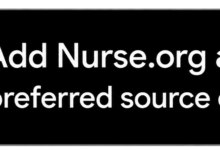
Starting later doesn’t carry a built-in pay penalty. Entry-level RN compensation is set by licensure, so a new nurse at 50 and a new nurse at 22 start at the same license-based rate. What varies between those two nurses is the same thing that varies between any two new nurses: the local market, the specialty, the shift, and the employer. In 2025, the median pay for a registered nurse was $97,550 per year, with room to grow into higher-paying specialties and advanced practice roles over time.
Second-Career Nurses Succeed In and Out of the Classroom
Life skills transfer to the classroom and to clinical settings. Take Zack Tippett, a recent 2025 Herzing graduate. For 17 years, he answered emergency calls as a paramedic and EMS shift supervisor. He wanted to go further in healthcare, but between his career and his responsibilities as a husband and father, going back to school felt out of reach. Herzing’s online Paramedic-to-BSN bridge program changed that. The flexible format let him keep working full-time, stay present for his family, and complete his Bachelor of Science in Nursing on a schedule that fit his life.
Zack’s years in emergency medicine turned out to be a strength. He already knew how to problem-solve under pressure, manage his time, and stay calm when it mattered most. Those skills carried directly into his coursework and clinical rotations. He graduated with his BSN in 2025 and is now pursuing his Doctor of Nursing Practice, building on the career he once thought he’d have to put on hold.
Zack isn’t the exception. He’s one of thousands of career changers who find their way to nursing later in life through programs built for exactly that path.
Some programs are developed specifically for non-traditional students balancing real-world responsibilities. Herzing University specializes in education and practical training for working adults and career changers.
- Accelerated BSN programs let you move faster. Herzing offers accelerated nursing programs so you don’t need four years to start a new career. If you’re changing careers, you’re probably looking for the fastest way to earn a BSN while working full-time.
- Online and hybrid learning fit around your schedule. Herzing’s online coursework paired with in-person clinical training provides the hands-on education nursing requires on a schedule that works for working adults.
- Campuses nationwide. Herzing offers more than 40 programs from diploma to doctorate across 13 campuses in nine states, plus a fully online option. That means a path forward without relocating or pausing a career already in progress.
A career in nursing is worth pursuing at any age. Herzing University’s nursing programs are built with adult learners and second-career students in mind. Learn more about Herzing’s nursing programs at herzing.edu.
-
Published on
October 27, 2026
Written by