The World’s First Blood Collecting Robot Is Here, Meet Aletta
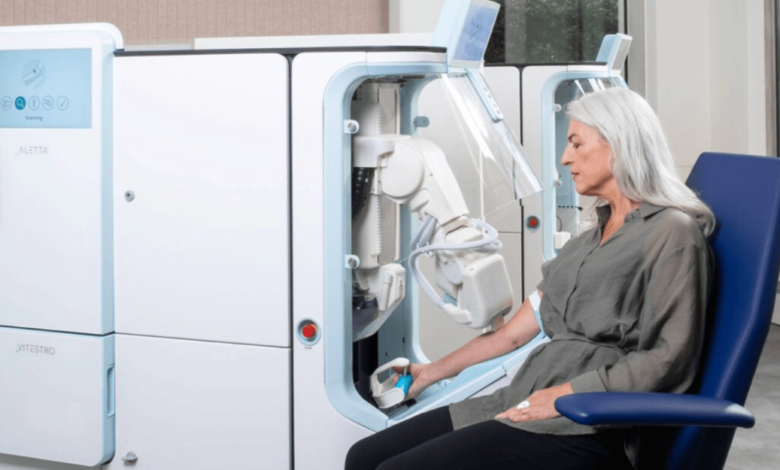
As technology will continue to infiltrate healthcare, we may have our first glimpse of how that can look in a practical application. Meet Aletta, the world’s first CE-marked Autonomous Robotic Phlebotomy Device (ARPD) to collect blood.
On January 12, 2026, Vitestro launched its new corporate website featuring the innovative technology that could transform blood collection in clinical settings. This development represents a significant leap forward in medical technology, offering a glimpse into the future of automated healthcare solutions.
Put simply, Aletta is an automated blood drawing machine. The Aletta system combines multimodal imaging, advanced robotics, and artificial intelligence to perform the complete blood collection process, from vein identification to needle insertion and sample collection.
According to the company, Aletta has a 95% first-stick success rate in vein location and blood collection. The robotic system:




- Autonomously positions the arm
- Locates suitable veins
- Guides needle insertion
- Collects the blood sample
- It even places a bandage on the site when the blood draw is completed
One supervisor can oversee three Aletta systems at once, so the creators say it’s ideal for high-volume blood collection centers as well.
Vitestro, the company behind Aletta, released a demonstration video showing how the robot fits into clinical workflows. Spoiler alert: it even positions the patient’s arm for you.
While the technology isn’t FDA-approved yet, it’s making waves in Europe, and Vitestro is working on global expansion, including the U.S.
While many blood draws are not done by nurses, staffing shortages are hitting many medical facilities hard, so companies are looking into solutions that can help ease healthcare workers’ workload.
According to Vitestro’s CEO, Toon Overbeeke, Aletta® aims to support clinical efficiency while improving patient experience. High-volume clinics could benefit the most, especially with patients with tricky veins or those who dread the needle. Plus, having a robot handle blood draws could free up time for more complex care tasks.
“Our new website and public video reflect a deliberate step toward more open communication and education,” said Toon Overbeeke, Chief Executive Officer of Vitestro, in a press release. “As we bring autonomous robotic phlebotomy into routine clinical practice, it is essential that healthcare professionals and patients clearly understand how the technology works and how it integrates into real-world care delivery. By making our technology and clinical workflow more visible, we are enabling informed adoption, building confidence, and supporting the responsible establishment of a new standard for diagnostic blood collection.”
If you’re curious, check out Vitestro’s website to watch the demo video or learn more. By staying informed about innovations like Aletta, we can stay ahead of the curve and help shape the future of nursing practice.
🤔Nurses, share your thoughts if the healthcare world is ready for a blood-collecting robot below.