911 Calls From Psych Nurses During Violent Youth Riot Released
Disclaimer: Names and identifying details have been withheld to protect the nurse involved.
After inpatient psychiatric patients ‘rioted’ against staff and other residents at a facility in Arizona, nurses were forced to call 911 for help. The incident has highlighted the need to take a closer look at how nurses from psychiatric facilities are speaking out against the dangers of understaffing, pointing to an increase in the number of assaults by patients, dangerous situations, and alleged dismissal from administration about safety concerns.
A psychiatric nurse who wished to remain anonymous reached out to Nurse.org about being involved in a frightening incident when the residents at the psychiatric facility she works at became out of control on not one, but two separate occasions.
Source: Quail Run employee
The incidents resulted in nurses being forced to call the police to help de-escalate the situation, staff members being assaulted, and several of the residents being placed under arrest.



The nurse and employee of the facility noted that while these types of occurrences are not “isolated” at psychiatric facilities, the public doesn’t always hear about such events. She reached out to Nurse.org, not to perpetuate stereotypes about psychiatric nursing, but to make a plea for the importance of safe staffing in such settings.
According to the anonymous nurse, Quail Run, a UHS facility, owns at least three inpatient psychiatric facilities in the Phoenix area: Quail Run Behavioral Health, Via Linda Behavioral Hospital, and Valley Hospital.
The Quail Run Behavioral Health unit treats inpatient adolescents, with many of the patients being “incredibly acute” and requiring 1:1 care. In July 2024, the adolescent patients verbalized an intent to ‘riot.’
Although the situations at the facility were already tense, with physical holds and Code Greys occurring ‘daily’ through the week, the nurse tells Nurse.org, administration did not increase staffing after the threats occurred. The nursing and behavioral health tech staff were all scared to come to work—one nurse was so scared, in fact, that she quit right before her shift so she wouldn’t be at risk.
Even with the additional short staffing the nurse’s absence created, nurse managers did not increase staffing or offer to assist. A nurse typically assigned to the adult unit was moved to the adolescent unit at the start of the shift when the assaults began. The scene where the alleged riot started looked like this:
- 26 juvenile inpatient psychiatric patients
- 2 nurses, who had 13 patients each
- 2 behavioral health technicians (BHT) to assist with the 26 patients
- 3 BHTs assigned to 1:1 patients
When fighting between the residents and towards staff broke out—as threatened—only one person was available to respond to help, and that BHT was immediately assaulted by several patients.
“There were not enough staff to safely restrain one patient, let alone several,” the nurse explained.
Unable to safely stop the situation and being attacked and assaulted themselves, the staff of Quail called 911 for help.
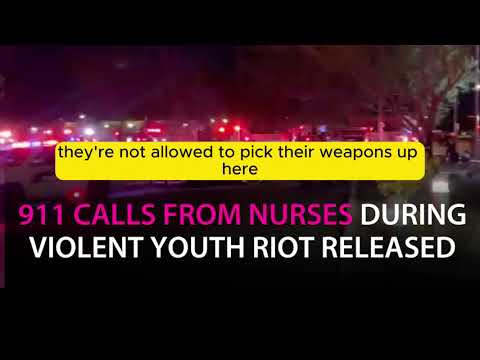
>> Listen to the full audio of the many 911 calls here.
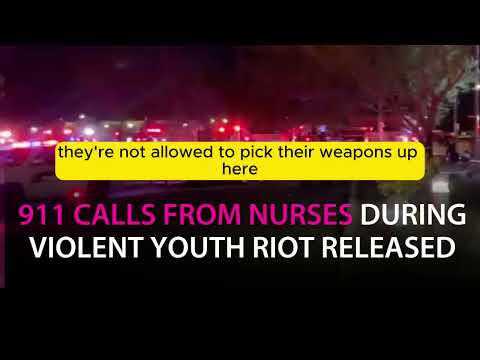
“We have children, adolescents who are rioting, essentially being very assaulted,” a nurse says in the 911 audio. “And we need, we need additional help. We don’t have the staff capability of dealing with it.”
“I was assaulted. I have another staff member that was assaulted,” she continues. “Currently, I have multiple adolescents that were assaulted in the course of it, so I haven’t even had a chance to assess them.”
A police report of the incident describes what officers found when they arrived to the unit:
- “Aggressive and disruptive behavior”
- “A lot of yelling and screaming”
- Active engagement in a “riot-type” event
- Juveniles “throwing things” around
- Juvenile patients fighting each other
- Juveniles becoming “hostile” and flipping tables to hide from officers and staff
- The juveniles barricaded themselves, so officers could not fully see them
- Officers unsure if the patients had created makeshift weapons
- Obscenities yelled at the officers
- Some juvenlines shouting at the officers to shoot them
- At least one patient physically assaulting a behavioral health technician

Source: PPD Police Report
The police report also noted that because many of the inpatients had a history of mental conditions, trauma, and other events in their past that placed them at a “high risk for violence.”
After being called to the scene, police pepper-sprayed the unit to gain control of the situation, detained 8 of the adolescent patients, and eventually charged six of them with things like assaulting a healthcare worker and police officer.
“It’s impossible to really relay the trauma of this experience on both staff and patients,” a nurse who was there during the incident tells Nurse.org.
Unfortunately, a Quail employee with inside knowledge of the event says that the July 2024 incident was “not an isolated incident.”
A similar riot also occurred in February of 2024, resulting in three staff members being placed to on medical leave and then light duty for weeks to months. Nurses were also forced to call 911 for help during that incident.
‘We’re having a full, like riot on the kids’ floor,” a nurse says in the 911 audio from that call. “They’re all punching us in the face. We can’t medicate them. They’re all fighting. I need, I need cops here…we can’t contain them. There’s not enough staff here. I called the CEO. He’s on his way, but I need people now. They’re busting through the doors…like, they broke the door.”
Quail had also been investigated in June, before the second riot, after an employee complained to The Arizona Department of Health Services (OSHA for the state of Arizona), who stated:
“Employees are potentially exposed to injuries due to rioting because of understaffing. There are three nurses for 40 children, including three nurses and two BHT for forty adults.”
The letter, the employee stated, was posted for all staff to see, right next to the time clock. The CEO’s written response was also posted, refuting the claim that units are understaffed.

Source: Quail Run employee
ADOSH did investigate Quail Run and found several “deficiencies,” including:
- A lack of emergency code carts
- A lack of proper RN staffing on the unit
- Improper use of restraints
- Residents engaging in self-harm because they were not monitored on time, per policies
- Residents abusing other residents, again, because of a lack of supervision
- Residents not being assessed properly
The report eventually concluded that the facility’s administrator “failed to ensure” proper policies were followed to protect the health and safety of patients by ensuring “sufficient” personnel needs.
“This deficient practice poses a risk to the health and safety of patients if the hospital is unable to provide the proper care and resources to meet the patient’s medical needs,” the report concluded.
The nurse who reached out to Nurse.org expressed that one of the most frustrating aspects of the incidents is that nothing seems to change, either in follow-up from administration after problems occur or when staff had expressed concern prior to the riots happening.
She pointed to the state surveyors and the Joint Commission survey of the facility following the incident as an example.
“And while state officials found several deficiencies related to staffing and more, this did not prompt any real change from the facility,” she notes. “Staffing did not change. There is no true accountability.”
The nurse also noted that none of the staff who were actually present for the incidents were interviewed by state surveyors or The Joint Commission.
Furthermore, after the July 2024 assaults, Quail’s administration did not permit any of the staff to go home.
“Nursing administration came in after being notified of the police response and left after several hours,” an employee relates. “Following the riot, staff were instructed to not use the word ‘riot’ or other inflammatory language if calling the police is necessary.”
The nurse who spoke to Nurse.org hopes that sharing her story will help highlight the importance of safety protocols—including proper staffing—for psychiatric inpatient facilities. The protocol protects both patients and staff, and because these units are often “hidden” away from other facilities, even in the same building. Additionally, because of the patients’ history with mental health, trauma, and other conditions, safety concerns can be brushed aside.
“My hope is that you’re able to share this to highlight the very real dangers associated with inadequate staffing in psychiatric care,” she says.