Army Reserve Nurses Score First-of-Its-Kind LPN-to-BSN Bridge at UMSL
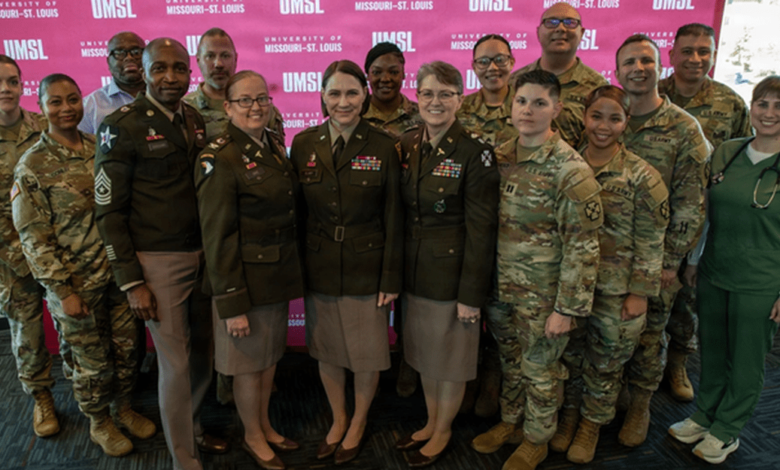
Image source: DVIDS
The U.S. Army Reserve and the University of Missouri-St. Louis College of Nursing have launched a first-of-its-kind LPN-to-BSN bridge program for Army Practical Nursing Specialists, giving enlisted soldier-nurses a direct, accelerated route from the 68C military occupational specialty to a Bachelor of Science in Nursing.
Announced April 22, 2026, the partnership between UMSL, the Army Reserve Medical Command, the 303rd Field Hospital in St. Charles, Missouri, the 807th Theater Medical Command, and the U.S. Army Recruiting Division is being described as a first-of-its-kind program that gives Army Practical Nursing Specialists a traditional classroom pathway to a BSN while recognizing their MOS-68C training for academic credit.
The first cohort of 30 to 50 students is expected to start in Fall 2026 at UMSL’s St. Louis campus, with all classes and clinical rotations held in the region.
The new pathway targets soldiers who hold the Army’s Military Occupational Specialty 68C, the practical nursing specialist role often called 68Charlie. These soldiers complete LPN training at Joint Base San Antonio-Fort Sam Houston, but until now have struggled to apply that training toward a BSN in a traditional classroom format.

Under the new UMSL 68C LPN-to-BSN curriculum, qualifying Army LPNs enter the BSN program as juniors and complete 59 credit hours over two years, including coursework in adult health, behavioral health, maternal and family care, pediatrics, pharmacology, pathophysiology, and healthcare policy.
To enroll, applicants must hold an active, unencumbered LPN license, complete the Army’s MOS-68C training as documented on a Joint Service Transcript, and be admitted through UMSL’s undergraduate application. Students can choose between a traditional BSN track or an Army ROTC officer commissioning track through the Gateway Battalion.
UMSL is also providing students with $1,200 per year for textbooks and $6,000 per year for housing, on top of existing military education benefits.
>>Listen to The Latest Nurse News Podcast
Army Reserve leaders are framing the bridge as a readiness investment, not just an education benefit. Lt. Col. Lynn Bowser, chief nurse for the 303rd Field Hospital, told DVIDS the program will help the Army Reserve close a longstanding gap in BSN-prepared nurses inside its medical units, where officer-level clinical leadership is in short supply.
UMSL College of Nursing Dean Roxanne Vandermause said in the university announcement that the partnership recognizes the clinical experience soldiers already bring to the classroom and translates it into academic credit, rather than asking them to start over.
For the Army Reserve, BSN-trained nurses are essential to staffing field hospitals like the 303rd, which deploy to provide combat casualty care, humanitarian missions, and disaster response. Promoting from within the existing 68C ranks is faster and cheaper than recruiting civilian RNs into uniform.
For nurses outside the military, this program is a notable case study in what an LPN-to-BSN pathway can look like when academic credit is fully aligned with prior clinical training. It also signals a broader push to retain experienced LPNs in the nursing workforce by removing the financial and logistical barriers that often stall their advancement.
For Army Reserve LPNs and recruiters, the practical impact is immediate. Soldiers in the 68C role now have an in-person, accredited route to a BSN that costs less out of pocket, recognizes their JST credit in full, and offers a direct line to officer commissioning if they choose it. Eligible soldiers can apply through UMSL’s undergraduate admissions for the Fall 2026 cohort.
Civilian nursing schools and hospital systems facing their own LPN-to-BSN bottlenecks may want to watch how UMSL’s full-credit JST model performs. If the cohort hits its 30 to 50 student target and graduates on schedule, the program could become a template for other universities partnering with the military, or with civilian LPN workforces, to widen the pipeline of bedside nurses moving into BSN-required roles.