Beloved San Diego ‘Singing Nurse’ Rod Salaysay Is Retiring After 30 Years
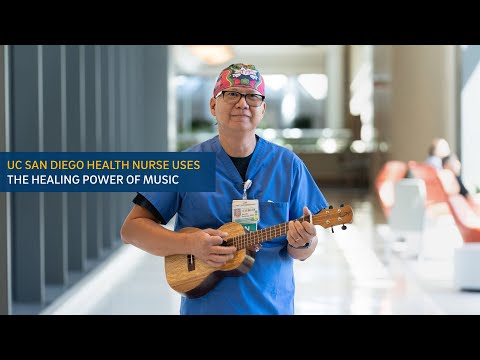
Image source: UC San Diego Health
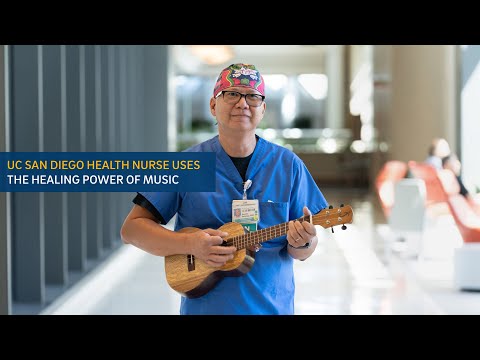
For more than 30 years, Rodelio “Rod” Salaysay, RN, showed up to work with something most nurses don’t carry in their badge pocket: a ukulele. Now, the Filipino-American post-surgical nurse who became known across San Diego as the “singing nurse” is hanging up his scrubs — and the outpouring from former patients and colleagues has been nothing short of overwhelming.
“He saved all of us,” one former patient told the San Diego Union-Tribune as news of his retirement spread.
Salaysay spent years in the trauma unit at Scripps Memorial Hospital La Jolla before eventually moving to the post-surgical recovery floor at Jacobs Medical Center at UC San Diego Health. It was the weight of that trauma work — caring daily for patients on the brink — that first pushed him toward music. According to Scripps Health, he wanted to offer something more, so he began writing original songs filled with hope, love, and support, performing them at bedsides even for patients who were unconscious.
A former patient later gifted him a ukulele, and the instrument became his signature. His repertoire spans folk songs in English and Spanish, classical pieces, jazz standards, and originals he wrote himself. One of those originals, “Heartstrings,” he has played at bedsides more than a thousand times.

Salaysay described the effect of music on his patients in a November 2025 interview with NPR’s Weekend Edition: “When you play for them, you’d see physiological changes in terms of blood pressure being a few points lower. Heart rate is a little bit slower. You know, they’re breathing easier.”
He recalled one patient who was unconscious after being struck by a car. He played for her anyway. When she woke up, she told him she had heard sounds she couldn’t quite make out. The experience moved him to write a song specifically for her called “You Can Make It Back.”
What he was looking for, he said, wasn’t dramatic — just a brief reprieve. “What I look for is how they temporarily put their mind somewhere without worrying about the diagnosis, the IV alarms. It’s just for 10 minutes that they’re able to be at peace, and all they need to do is just to listen.”
Salaysay may have worked intuitively, but the research backs him up.
Caroline Palmer, a professor of psychology at McGill University, explained to NPR that the connection between music and pain relief is well established, and that scientists are still uncovering the mechanisms behind it. “Pythagoras, a long time ago, knew that music affected our sensation of pain,” she said, noting that modern brain imaging is only now helping researchers understand why.
Palmer pointed to the relationship between musical tempo, mood, and pain: when music lifts your mood, it can raise your pain threshold. She also noted that listening to music activates the motor cortex even when you’re sitting still. “These connections between the auditory and the motor cortex… suggests that when you listen to music, your motor cortex is working, whether you’re moving or not. And that could be another route to reducing pain, the fact that motor activity tends to lower someone’s pain sensation.”
Clinical research supports this. A systematic review of nursing music interventions published in Complementary Therapies in Clinical Practice found that music was effective in relieving anxiety and pain in more than half of the studies examined. A 2025 study from University Hospitals in Cleveland analyzing more than 2,000 music therapy sessions found clinically significant reductions in pain intensity within a single session for many patients. And a randomized clinical trial in postoperative orthopedic patients found that music lowered both pain perception and heart rate compared to a control group, concluding it represents “a safe, low-cost, and nonpharmacological strategy to enhance patient comfort and recovery.”
>>Listen to The Latest Nurse News Podcast
Over the course of his career, Salaysay became a fixture not just on his unit but in the national media. He was featured on CNN, covered repeatedly by local San Diego news outlets, and most recently profiled by NPR. His story resonated because it was both deeply personal and clinically relevant: a bedside nurse doing something simple, consistent, and effective, without a grant or a protocol behind it.
He let patients choose from his playlist when they could, and when they couldn’t, he made the call himself. Old jazz classics, “Summertime,” “Minuet in G Minor,” “Somewhere Over the Rainbow” on the ukulele.
Salaysay’s farewell has prompted an emotional response that reflects how rare his particular brand of nursing care is — not because the instinct to comfort is rare, but because so few nurses have the time, space, or institutional support to act on it the way he did for three decades.
His story is a reminder that nursing has always been more than clinical tasks. The bedside is a human space, and sometimes what a patient needs most has nothing to do with a medication or a procedure.
For the nurses who have spent their own careers searching for small ways to make a hard moment a little more bearable, Salaysay’s retirement reads like both an inspiration and a challenge.
The ukulele stays. The question is who picks it up next.