Meet the 18-Year-Old About to Become FSU’s Youngest Nurse Ever
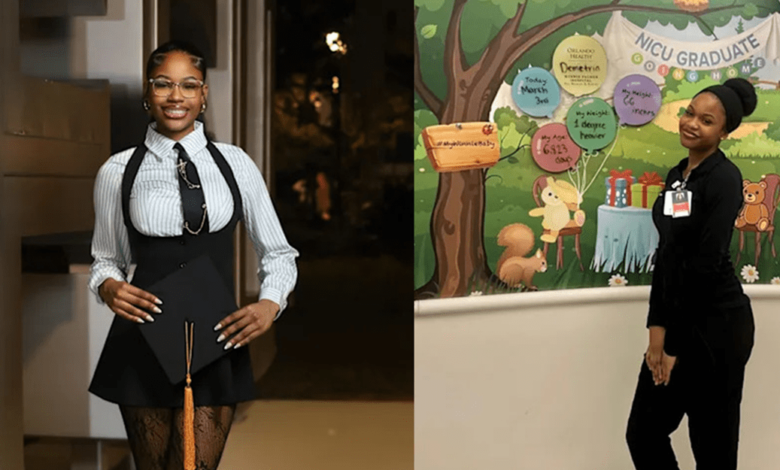
Image source: AOL
Demetria Coley is set to become the youngest graduate in Florida State University College of Nursing history when she walks across the stage at the 2 p.m. commencement on May 1, 2026. She is 18 years old.
Coley will receive her Bachelor of Science in Nursing one day after her white coat and pinning ceremony, scheduled for 5:30 p.m. on April 30 at FSU’s Ruby Diamond Concert Hall. She is one of 215 nursing students earning a degree from FSU this spring, including 156 bachelor’s, 20 master’s, and 39 doctoral graduates.
Her plan after graduation: work as a NICU nurse, the same profession her late mother chose.
Coley’s path to FSU started at home. Her father, Demetrius Coley, a science teacher and department chair at R. Frank Nims Middle School, homeschooled her from birth through middle school, structuring her education to keep her ahead of grade level.

By the time most teenagers were starting high school, Coley was finishing an associate of arts degree at Tallahassee Community College, now Tallahassee State College. She earned that degree in 2023 at age 15, also becoming the youngest graduate in that institution’s history. She walked at Lincoln High School the same year.
From there, she enrolled in FSU’s College of Nursing, completed clinical rotations at Tallahassee Memorial HealthCare, and finished a preceptorship at Orlando Health Winnie Palmer Hospital for Women and Babies, where she trained alongside NICU staff.
>>Listen to The Latest Nurse News Podcast
Coley’s mother, Elicia Coley, was a nurse. She died of ovarian cancer in November 2020, when Demetria was 13.
“I’m proud of the fact that I’m able to continue to make history and be able to make my mom proud,” Coley told the Tallahassee Democrat.
Coley initially considered medical school, but clinical rotations changed her direction. She said: “I realized that as much as surgeons do, they don’t really get to interact with patients in the hospital as much and care for them as in depth as a nurse does.”
Her older sister, D’Aundra, is currently a graduate student at the University of Central Florida. The family is expected to gather in Tallahassee this week for both the pinning ceremony and commencement.
Coley is part of a small but visible group of teen nurses entering the profession. Her arrival is a reminder for preceptors, charge nurses, and unit managers that the next class of bedside RNs may include more nontraditional and accelerated paths than usual.
NICUs in particular demand advanced clinical judgment, fast decision-making, and emotional resilience, which is why most hospitals run structured new graduate fellowships before letting any new RN, regardless of age, take a full caseload. For nurses on the floor, mentorship pacing and orientation structure matter even more when a new hire is closer to high school graduation than to the typical 22-year-old new grad. The clinical bar does not move; the support around the new nurse has to be tighter.
Coley’s story is also a reminder that representation in nursing extends beyond race, gender, and specialty. It includes age and life experience, both of which shape how a nurse shows up at the bedside, especially in a unit caring for the most fragile patients in the hospital.