4,000 Nurses Just Walked Out at Brigham in the Largest Strike in Mass. History
Image source: Boston Globe
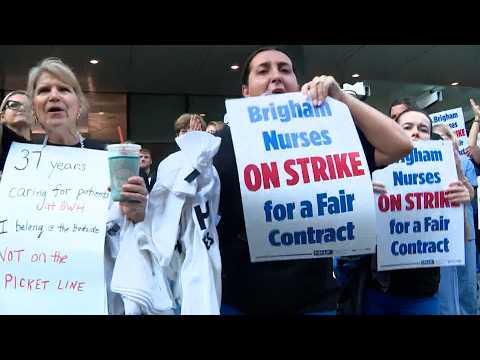
More than 4,000 nurses at Brigham and Women’s Hospital walked off the job at 7 a.m. on July 8, forming picket lines outside the Boston hospital on Francis Street in what the Massachusetts Nurses Association calls the largest nurse strike in state history. It is the first-ever strike by Brigham nurses and the biggest nurse walkout Massachusetts has ever seen.
They were joined the same morning by roughly 450 MGB Home Care clinicians, who launched a seven-day walkout of their own. It is also the state’s first nurses strike since May 2022, when Saint Vincent Hospital nurses in Worcester walked out.
The walkout is the culmination of a bargaining breakdown between the union and Mass General Brigham, the hospital’s parent system. The two sides had met for months, but one issue became the center of the fight: no across-the-board cost-of-living increases.
Want to see more Nurse.org articles in your Google results? Add us as a preferred source.

The two sides met for the last time on July 2. According to the Massachusetts Nurses Association, nurses offered to compromise and to keep negotiating at any point before the strike, but MGB representatives said that morning they would not move off their 0% cost-of-living wage proposal.
A last-ditch intervention came Monday, when Gov. Maura Healey hosted representatives from both sides at the State House to try to broker a deal. It did not produce one. Lead union negotiator Kelly Morgan said nurses remained ready to bargain but that MGB would not budge off its “insulting 0% offer” or engage on health insurance and temporary staffing.



The union escalated in writing as well. In a July 3 letter to the MGB board of directors, bargaining leaders argued the strike and lockout were the board’s responsibility, contrasting the wage offer with the system’s $35.8 billion in assets and $35.9 million in combined compensation for 14 current and former executives in fiscal 2024, including $8.4 million for CEO Dr. Anne Klibanski.
>>Listen to “The Largest Nurse Strike in Massachusetts History” episode
The math of the dispute is unusually clear. The union wants a 3% across-the-board increase in the first period of an 18-month contract and 4% in the second. The hospital has offered no across-the-board raises, arguing that the 5% step increase nurses receive on their work anniversary keeps them among the highest paid in the state. On health insurance, MGB is asking the roughly half of union members on the Harvard Pilgrim plan to pay 2.5 percentage points more of their monthly premium.
MGB has leaned on its pay data. Brigham nurses start at $86,700, and nurses with two decades of service earn at least $220,000, a maximum that nearly one-third of the union, 1,322 nurses, has reached. The hospital says its compensation sits in the top 10% of the market for acute care hospitals both locally and nationally.
The union counters that step increases are not raises but seniority progression that nurses at the top step do not receive at all. “MGB is essentially proposing a wage cut,” said Jim McCarthy, RN, vice chair of the bargaining committee. Nurses are also pressing for limits on temporary travel nurses and protection of services threatened by recent MGB decisions, including the elimination of the Brigham Burn Unit according to the union.
Here is the wrinkle nurses across the country will recognize: the walkout is scheduled to end at 6:59 a.m. Thursday, but nurses will not be back at the bedside until Monday. The hospital has brought in more than 1,200 traveling nurses, and because those contracts require a five-day minimum, union nurses cannot return until July 13.
Labor and delivery nurse Jennifer DeVincent told the Boston Globe the hospital is “paying for flights, hotels, food” for replacements while refusing cost-of-living raises for its own staff. MGB spokesperson Jessica Pastore countered that strike preparedness costs are temporary and tied to a defined stoppage, unlike a permanent wage adjustment that compounds year after year. No additional bargaining sessions are currently scheduled, though MGB board chair Scott Sperling has said the board still wants to reach an agreement through continued talks.
Whether you are in Boston or across the country, the Brigham fight is a live test of a question every nurse eyeing a contract wants answered: does walking out actually change anything? Nurse.org’s Nurse Strike Intelligence analysis of more than 100 U.S. nurse strikes since 2017 points to a clear pattern, with one condition attached. Among walkouts that reached a settled contract, nurses won better staffing in roughly nine out of 10, and staffing, not pay, was the top issue in most of them. The catch: those gains tend to show up when nurses stay at the table until there is a deal.
This walkout is different in shape. Approximately four in 10 of the strikes we tracked lasted a single day, and short, high-visibility actions like this one are built to pressure an employer rather than settle a contract on the spot. Brigham fits the profile where that pressure lands hardest, a flagship academic medical center in a very public fight.
The open questions now are whether MGB moves off its 0% offer once the pickets clear, and whether the July 13 return date holds. Both are worth watching, along with next week’s St. Charles strike on Long Island, on the 2026 nurse strikes list.
🤔 Are you a Brigham nurse on the picket line today, or a nurse watching this fight from another facility? Tell us what you are seeing in the comments below.
If you have a nursing news story that deserves to be heard, we want to amplify it to our massive community of millions of nurses! Get your story in front of Nurse.org Editors now – click here to fill out our quick submission form today!
-
Published on
July 8, 2026
Written by