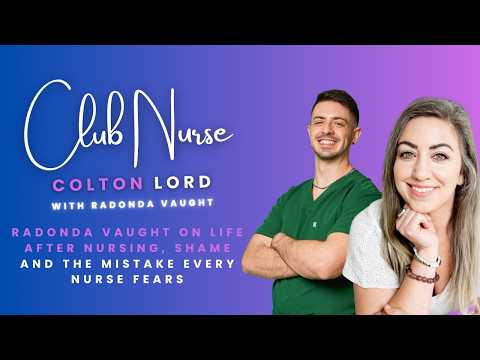
RaDonda Vaught on Life After Nursing, Shame, and the Mistake Every Nurse Fears
The views, thoughts, and opinions expressed in this episode belong solely to the host and guest and do not necessarily reflect the official policy, beliefs, or position of Nurse.org.
Most nurses already know the name.
In December 2017, RaDonda Vaught was a neuro ICU nurse at Vanderbilt University Medical Center in Nashville. A 75-year-old patient named Charlene Murphey had been prescribed Versed, a sedative, to help her get through a scan. Vaught pulled the wrong drug. She gave vecuronium, a paralytic. Murphey was left alone and unmonitored, and she died.
Vaught reported the error herself. She lost her job within a week. She later lost her nursing license, was arrested in 2019, and in 2022 was convicted of criminally negligent homicide and abuse of an impaired adult. A jury acquitted her of the more serious reckless homicide charge. She served three years of probation. Nurse.org followed her trial and sentencing as it happened.
She is no longer a licensed nurse and does not hold any professional license, a point she makes clear every time she speaks publicly.

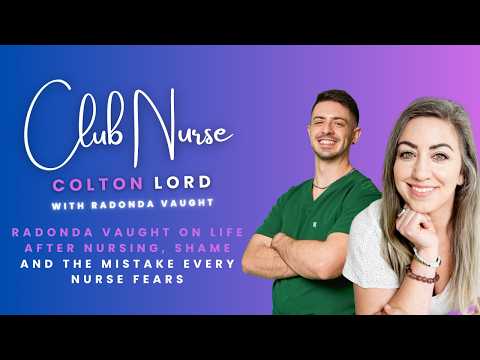
On this episode of the Club Nurse Podcast, she talked with host Colton Lord, BSN, RN, about what happened, what she learned, and what she wishes the rest of the profession understood.
>>Listen to RaDonda Vaught: Life After Nursing, Shame, and the Mistake Every Nurse Fears
Want to see more Nurse.org articles in your Google results? Add us as a preferred source.
Vaught stopped the conversation almost as soon as it started to make one thing clear. She narrates the story, but she does not own it.
“This is Charlene Murphey’s story as much as it is anyone else’s,” she said. “It’s a whole community worth of people.”
She keeps talking about it because the court case put something on the table that nurses almost never get to see. Thousands of pages of records and evidence became public in a way they never would have otherwise. She also points out how little of it there was to begin with: her incident reports and a few notes. It’s a reminder of how thin a paper trail can get, and how much weight the little that exists ends up carrying.
Her worry is that the case became one more reason for people to stay quiet: not just about serious events, but about near misses, the small stuff that could actually be fixed. She has spoken previously about what a Board of Nursing investigation actually looks like from the inside, including the months she spent waiting to hear anything at all.
“I don’t want to be the reason why more people are hurt.”
Vaught pushed back hard on the idea that anyone chooses to make an error.
“A mistake is not a choice. It only looks like a choice in hindsight,” she said. “You’re certainly not setting out to create this intended negative outcome.”
She told a story from a job she took after Vanderbilt, before any of it became public. A nurse still on orientation had hung the wrong drip on a fresh heart patient. It was caught in minutes. No harm came to the patient. But the nurse was crying through report.
Vaught sat down with her and said something she hadn’t said out loud to almost anyone: I know how you feel, because I made a really bad one.
Years later, after the arrest, that nurse wrote her a letter about those five minutes.
The verdict landed just as the profession was coming out of the worst of the pandemic, and it mobilized nurses nationally. The American Nurses Association and the Tennessee Nurses Association said in a joint statement that criminalizing the honest reporting of mistakes sets a dangerous precedent and warned it would have a lasting negative effect on the profession.
Vaught’s own read is blunt. Prosecuting someone for an unintended error they reported themselves, she argues, drives reporting underground rather than making patients safer.
The word accountability is the one that gets under her skin. She stopped mid-episode to ask Lord what it meant to him.
Her point: accountability is not something you do to another person.
“Accountability is an act of one person. It’s their ability to account for their actions.”
An account is a story. Being accountable means being the one who tells it: showing up, staying in an uncomfortable conversation, and owning your part. What she sees instead is a culture where blame and accountability have blurred together, and accountability has quietly turned into punishment.
“There is life after,” she said. “If anyone can say there’s life after, I think I’m proof of that.”
It took a long time. The shame was strong enough, she said, that showering and brushing her teeth felt like more care than she deserved. She and her husband run a farm now, and she says her nursing education comes in handy constantly.
“No level of charging me criminally is going to take away the education that I have,” she said. She still signs BSN after her name. She’s still paying the loans on it.
Asked for parting words, she talked about the eight months she worked before anyone knew — going into the respiratory closet at three in the morning to cry, then going back to her assignment.
“You don’t know what other people are going through. And a little bit of kindness goes so far.”
She wanted the nurses who sent five dollars, wrote letters, or stood outside the courthouse to know it changed her life.
Listen to the full conversation with RaDonda Vaught on the Club Nurse Podcast at nurse.org/clubnurse, or wherever you get your podcasts.
🤔 Nurses, what does accountability mean to you, and have you ever seen it turn into blame instead? Tell us in the comments below!
If you have a nursing news story that deserves to be heard, we want to amplify it to our massive community of millions of nurses! Get your story in front of Nurse.org Editors now – click here to fill out our quick submission form today!
-
Published on
August 11, 2026
Written by
Co-written by