Nurses’ Next Big Legislative Fight Is Workplace Violence, ANA President Says
From workplace violence and staffing to Medicaid cuts and nursing education funding, American Nurses Association President Jennifer Mensik Kennedy says the decisions shaping the future of nursing require nurses to speak up and stay engaged.
Healthcare policy can feel a long way from the bedside. But for nurses working 12-hour shifts, navigating insurance denials, dealing with staffing shortages or facing violence at work, decisions made in Washington have real consequences.
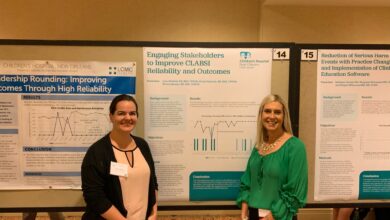
That was the message Dr. Jennifer Mensik Kennedy, president of the American Nurses Association (ANA), brought to the 2026 ANCC Magnet & Pathway Conference in Chicago, where she spoke about the state of healthcare policy and what nurses should be watching.
Mensik Kennedy leads an organization that represents the interests of more than 5 million registered nurses, and she was named to TIME’s 2026 TIME100 Health list. While nurses are often recognized as one of the most trusted professions, she believes that recognition has not always translated into influence.
In a conversation with host Jana Price on Nurse Converse, recorded days before the Nov. 3 elections, Mensik Kennedy discussed the legislative battles ahead, the fight against workplace violence, the gap in federal nursing education funding and why nurses must get more involved in the decisions shaping their profession.




Want to see more Nurse.org articles in your Google results? Add us as a preferred source.



Mensik Kennedy said the election’s outcome would shape which healthcare priorities move forward when the next Congress begins in January. Committee leadership, appropriations and control of the House and Senate all influence what legislation advances, and bills that didn’t pass in the current Congress will have to be reintroduced.
Beyond the political landscape, she said nurses should be watching healthcare access. Medicaid funding, hospital closures and the loss of obstetric services are among the issues ANA is tracking, and she said Medicaid changes could be on the table as soon as January 2027.
“Most states are having detrimental impacts within their budgets, within their Medicaid programs and healthcare across the board,” she said.
Rural hospitals are struggling, and some communities are losing obstetric care. For nurses, those changes affect where patients receive care, whether they can get services and what happens after they leave the hospital.
Prior authorization is a familiar example. Mensik Kennedy noted that prior authorization reform has come before Congress twice and nearly passed last year. She said she doesn’t think there’s a single nurse whose patients haven’t been affected by prior authorization problems.
Whether it’s a denied medication, an insurer refusing to cover the next level of care or a rejected hospital stay, nurses are often left managing the fallout.
She described a patient who had coronary artery bypass graft (CABG) surgery, only to have the insurer deny inpatient status.
“I had a patient have a CABG a couple years ago, and the insurance denied it because they said that they didn’t qualify for inpatient status,” she said. “I don’t even know what to say about that.”
For Mensik Kennedy, one issue deserves more attention from nurses across the country: workplace violence.
When the Department of Education moved to exclude nursing from its definition of professional degrees, which affects federal student loan limits, nurses responded with a flood of letters. She wants to see that same energy behind workplace violence.
“Most people here at the conference and when you talk to anyone says workplace violence is a big issue for me,” she said. “And I think people say, ‘Well, how can we get the same type of groundswell behind workplace violence?’”
Her answer: nurses need to tell lawmakers their stories.
ANA plans to push its workplace violence legislation again in January 2027. The bill, the Workplace Violence Prevention for Health Care and Social Service Workers Act, would require OSHA to set a workplace violence prevention standard for healthcare and social service employers. It passed the House in 2019 and 2021 but never cleared the Senate.
This time, Mensik Kennedy wants nurses to help change the outcome.
“We need that same groundswell,” she said. “We need people who are just as passionate about being called ‘not professional’ to write in their stories and explain how it’s impacted them.”
She said research by a state nurses association found that workplace violence can dramatically affect nurses’ home lives, so the harm doesn’t end when a shift does.
“You guys need to stop accepting it,” Mensik Kennedy said. “Because I know people are like, ‘Well, I don’t accept it.’ But there are people who just still think that’s part of the role.”
She also drew a line between penalties and prevention. Some legislation focuses on what happens after an assault, she said, but nurses need preventive measures too, which is what an OSHA standard would provide.
For nurses who want to get involved, she pointed to RNAction.org, ANA’s advocacy network, where nurses can sign up for legislative alerts.
“When we ask for letters for Congress, please write a letter about your personal experience,” she said. “We’re really going to push on workplace violence in this next Congress, and we need all nurses’ help to do that.”
In her previous Nurse Converse conversation with Jana, about federal student loan limits, Mensik Kennedy said, “We might be the most trusted profession, but we’re not always the most respected. And that changes when we’re consistently at the table.”
Has that changed? Not enough, she said.
“We’re definitely still fighting to get in the room. We’re still fighting to have those conversations.”
She added another distinction about what it takes to influence policy.
“Advocacy is getting yourself to the table, but diplomacy is staying at the table,” she said. “That’s the other half that we don’t think about.”
Being invited in is only the beginning. Nurses also have to work with people who don’t share their views and find common ground.
Part of changing that dynamic, she said, is helping the public see nursing beyond the traditional image of a nurse at a hospital bedside, which is the aim of ANA’s public campaign, the Power of Nurses. Nurses work in education, research, administration, policy, public health and many other areas.
She encouraged nurses to stop minimizing their own contributions and to raise their hands when someone is looking for a nurse to volunteer.
“Don’t say, ‘I’m just a nurse.’ I never want to hear anyone say that,” she said.
“It will be a great learning experience for you, but it’s going to be a great learning experience for everyone at the table to hear what you can contribute, because you have so much to contribute.”
For nurses who are already exhausted, adding political advocacy to a demanding life can feel overwhelming. Mensik Kennedy acknowledged that, but challenged nurses to rethink what advocacy requires.
“Advocacy is not a sprint, it is a marathon,” she said. “And it’s a relay.”
It can mean attending a state nursing association’s advocacy day, sharing legislative information with colleagues or sending a quick email to a representative. It doesn’t require running for Congress or sitting on a board.
“It probably would take five minutes, right? Sitting in a parking lot, waiting for your kid to get out of soccer practice to type up that email about workplace violence.”
The point is to stay engaged rather than treating advocacy as a one-time task. “People need to continuously hear from us,” she said.
“There’s nobody else that can speak for nurses but nurses.”
Social media also makes it easy to pass along advocacy alerts to nurses who may not be connected to professional organizations.
Workplace safety isn’t the only issue Mensik Kennedy wants nurses to watch. The way the federal government funds nursing education is another.
Federal nursing workforce programs under Title VIII of the Public Health Service Act receive about $305 million for fiscal year 2026, and she said nursing advocates struggle each year to keep that funding from being cut. She compared it with federal support for graduate medical education (GME), which pays for physician residency training.
Physicians get “20 billion dollars a year,” she said, “and we are fighting for 300 million dollars.”
Part of the reason is structure. Most GME money flows through Medicare, administered by the Centers for Medicare & Medicaid Services (CMS), so it doesn’t need congressional approval “time and time again,” she said. Nursing programs depend on annual appropriations.
She pointed to legislation from Rep. Lauren Underwood and others to create a similar payment structure for advanced practice nurses and said she expects it to be reintroduced in the next Congress. Underwood’s Educating Future Nurses Act, introduced in 2023, would create a permanent funding stream within Medicare for graduate nursing students’ clinical training.
“That is a game changer for nursing education,” she said.
The funding question connects to how the federal government recognizes nursing as a profession. After a federal judge blocked part of the Department of Education’s professional degree definition in June, the department began treating MSN, DNP and nurse anesthesia doctoral programs as professional degrees for student loan purposes. Nursing PhD programs are still not on that list, and lawsuits, including one filed by ANA, are pending. Mensik Kennedy said Congress will need to act so that all nurses are recognized as professionals.
Near the end of the interview, Jana asked Mensik Kennedy to pick one healthcare policy issue every nurse should focus on, and one action they could take the next day.
She couldn’t quite choose just one.
“The workplace environment is so important,” she said, naming workplace violence as her first priority, followed closely by staffing.
“It’s a hard tie,” she acknowledged. But she was clear about the order.
“People’s physical well-being first and foremost, and then let’s work on staffing.”
Listen to the full conversation with Dr. Jennifer Mensik Kennedy on the Nurse Converse Podcast, or wherever you listen to podcasts.
🤔 Have you ever written to a lawmaker about workplace violence or another nursing issue? Tell us in the comments below.
If you have a nursing news story that deserves to be heard, we want to amplify it to our massive community of millions of nurses! Get your story in front of Nurse.org Editors now – click here to fill out our quick submission form today!