Lynn Winfield, RN: Bringing Sickle Cell Gene Therapy to LA
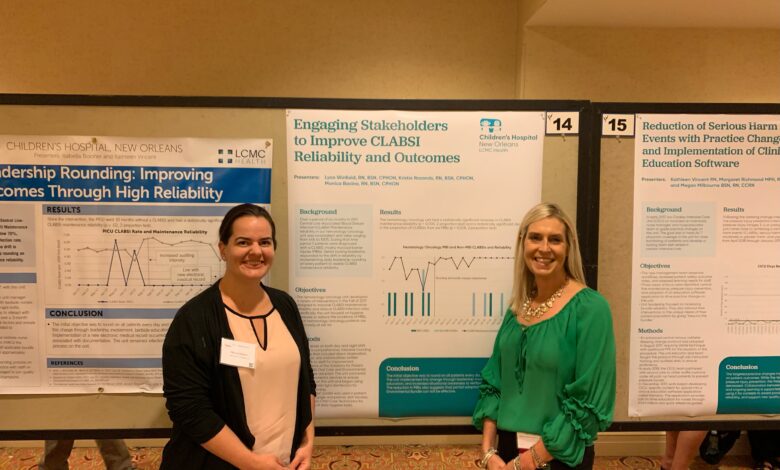
When Lynn Winfield, MBA, BSN, RN, NEA-BC, CPHON, was in high school, she read a book that would go on to change her life. The book was Eric by Doris Lund, the memoir of a teenager with acute leukemia, and it inspired the teenager to decide that when she grew up, she would care for children with cancer and blood disorders.
And more than three decades later, she is doing just that. As the Senior Director of Patient Care Services, Center for Cancer and Blood Disorders, Palliative Care, and Pharmacy at Manning Family Children’s Hospital in New Orleans, Lynn has worked tirelessly to help bring some of the most advanced treatments in medicine to patients in Louisiana through gene therapy.
Gene therapy aims to treat the genetic cause of a disease instead of only managing its symptoms.
For sickle cell disease and transfusion-dependent beta thalassemia, the process works like this:
- The patient’s stem cells are collected.
- The cells are sent to a manufacturing facility, where they are genetically modified.
- The patient receives chemotherapy to prepare their bone marrow.
- The modified cells are infused back into the patient.
Manning Family Children’s is authorized to provide therapies from Vertex and Genetix. According to Winfield, Vertex’s therapy uses gene editing to increase fetal hemoglobin production, while Genetix’s uses gene addition to help the body produce healthy hemoglobin.
“The exciting part is that these therapies offer the potential for a functional cure and a dramatically improved quality of life,” she says.
At her center, gene therapy is available for eligible patients with sickle cell disease and transfusion-dependent beta thalassemia. She says the treatments can significantly reduce complications and, for some patients, eliminate the need for chronic transfusions.
Want to see more Nurse.org articles in your Google results? Add us as a preferred source.


Winfield is clearly a leader and changemaker, and she tells Nurse.org that while she initially considered becoming a physician, she chose nursing instead because of the relationships it allowed her to build.
“I realized nursing was a better fit because it allowed me to build relationships with patients and families and make a difference through care, education, support, and advocacy,” she explains.
Her career pathway began by working at Children’s Hospital New Orleans, now Manning Family Children’s, in May 1992 while she was still in nursing school. She became a registered nurse there in January 1993 and moved quickly into leadership, taking the following roles:
- 1993: Assistant nurse manager
- 1998: Director
- 2021: Senior director of patient care services
She now oversees the hospital’s Center for Cancer and Blood Disorders, along with palliative care and pharmacy. “What I enjoy most is bringing people together to solve complex challenges,” she says.

One of the proudest moments of Winfield’s career has been helping to establish Manning Family Children’s as Louisiana’s only authorized treatment center for gene therapies for sickle cell disease and transfusion-dependent beta thalassemia.
“Knowing we’ve opened the door to life-changing treatments for patients is incredibly fulfilling,” Winfield notes.
The hospital’s sickle cell disease treatment program now offers these therapies to eligible patients. In 2026, the hospital reported that a 23-year-old patient, Daniel Cressy, became the first in Louisiana to be functionally cured of sickle cell disease after receiving gene therapy there.

The therapies carry list prices between $2.2 million and $3.1 million, so the hospital must also secure payment agreements that guarantee reimbursement. After that, the work really begins as:
- Approval alone can take four months to two years.
- After approval, patients still go through stem cell collection, manufacturing, and treatment preparation.
- From first authorization to hospitalization for treatment, the process typically takes 11 to 18 months or longer.

Winfield is passionate about nursing getting involved in knowing more about gene therapy and advocating for approvals. Her own work has included building the infrastructure, partnerships, and reimbursement pathways needed to bring the treatments to Louisiana.
“Nurses often have the most comprehensive view of the entire process and serve as the bridge between clinical care, operations, finance, and patient advocacy,” she points out. “Our role is to remove barriers, coordinate care, and keep patients moving forward through a very complex journey.”
Nurses can get involved in gene therapy and the approval process directly, but Winfield says all nurses can help spread the word that it even exists in the first place. She suggests steps such as:
- Spread the word. Make patients and families aware that these therapies exist.
- Identify candidates. Watch for patients who might be eligible.
- Refer. Connect families with specialized treatment centers.
- Use manufacturer resources. Both Vertex and Genetix offer educational materials, patient support programs, and information on authorized treatment centers.
“Sometimes a single conversation or referral can change the course of a patient’s life,” she says.

Winfield hopes her work inspires nurses to keep advocating for their patients, even when the road to new treatments is long. She also hopes gene therapies become more accessible and more affordable over time.
“Ultimately, I hope to see more patients gain access to care, more nurses recognize the impact of their voice, and a healthcare system that continues to expand opportunities rather than create obstacles,” she says.
Winfield points out that many patients with sickle cell disease face serious health challenges, barriers to care and stigma, and that they need nurses willing to speak up for them.
“Never underestimate the power of your voice,” she says. “Meaningful change often starts with one nurse willing to ask a question, challenge a barrier, or advocate for a better outcome. When we do that, we have the power to change lives.”
🤔 Have you heard of gene therapy? Tell us your experience in the comments below.
If you have a nursing news story that deserves to be heard, we want to amplify it to our massive community of millions of nurses! Get your story in front of Nurse.org Editors now – click here to fill out our quick submission form today!