“Pick a Lane”: How Nurses Can Fight for Science Without Burning Out
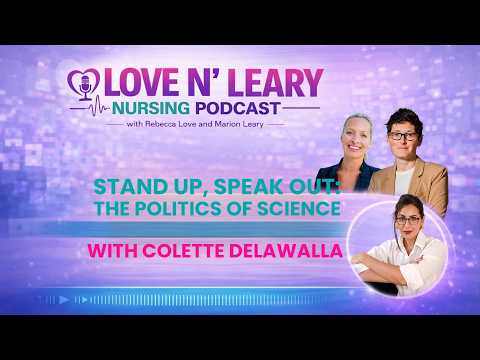
The views, thoughts, and opinions expressed in this episode belong to the hosts and guest and do not necessarily reflect the official policy, beliefs, or position of Nurse.org.
When Colette Delawalla, PhD, was wrapping up her doctorate at Emory University, she was days away from submitting the biggest grant of her career. Nine months of work. Her first major proposal, headed to the arm of the National Institutes of Health that studies alcohol use.
Then a list of banned words came out.
“Woman” was on it. So were “community,” “Black,” “LGBTQ,” and “vulnerable.” These were words she needed to describe the people her research was built around. Delawalla studies compulsive alcohol use, and her sample was designed to mirror the 2020 U.S. Census. Describing who was in it wasn’t optional.
Her grants office told her they had no guidance. Their suggestion: take the words out.
She didn’t.
“I’ll be d*mned if I take the word woman out of my grant after fighting as hard as I have to become a woman scientist.”
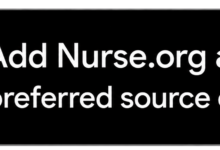
>>Listen to Stand Up, Speak Out: The Politics of Science (with Colette Delawalla, PhD)
Want to see more Nurse.org articles in your Google results? Add us as a preferred source.

Delawalla figured she couldn’t be the only person furious that day. Lots of researchers were facing the same deadline. So she went looking for a protest to join on Reddit, Facebook, Instagram, Bluesky. She was ready to get on a plane.
There wasn’t one.
“You’ve got two options,” she remembers thinking. “You could sit there and wish that somebody else would do something, or you can do it.”
She posted on Bluesky that there would be a Stand Up for Science protest, picked a date when some members of Congress would be in D.C. and others back in their districts, and gave herself three and a half weeks to plan it. She expected about 50 people.
Tens of thousands turned out, across the country and beyond.
Afterward came the harder question: now what? Delawalla said she assumed established institutions would step into the gap; that they’d see the energy and put their resources behind it. They didn’t. So she built the organization herself.
Rebecca Love, RN, MSN, FIEL, told Delawalla she’d shown up to the Boston rally and realized she was one of the very few nurses in the crowd, because nurses haven’t traditionally seen themselves as part of the science community.
Delawalla pushed back on that instinct hard. The organization is called Stand Up for Science, she pointed out; not Stand Up for Scientists. Mathematicians have asked the same question. So have science teachers. Her framing: it’s a big tent, and the question at the door is simply whether you’re in.
“Nurses are the ones who are applying the science, and you can’t overlook that.”
Marion Leary, PhD, MPH, RN, noted that she and Love co-chair the Nursing is STEM Coalition, which is pushing for federal agencies to formally designate nursing a STEM field. Delawalla offered to sign on the spot.
Delawalla said she resists framing the moment purely as a funding story. In her view, what’s happening to federal grants is a symptom of something larger: pressure on independent centers of thought. Her practical forecast for research funding is to expect continued cuts, and continued rearranging of where the remaining money goes.
She also warned researchers against assuming their own corner is safe. Your grant may be intact today, she said, but that’s not a strategy.
Pick a Lane and Stay There
Love asked the question many listeners are probably sitting with: there’s so much happening at once. How do you stay effective without burning out?
Delawalla’s answer was blunt. Pick a lane.
Spread yourself across every issue and you’ll feel paralyzed, she said, because there’s genuinely too much to do. So choose one. For a nurse, that might be vaccines. It might be veterans’ care if you work at a VA. It might be Medicaid access if you’re at a state hospital.
Then do one small thing a day. Her own habit is calling a single congressional office on her way into work. Usually it’s voicemail. Sometimes it’s a nervous intern. Either way, it’s a data point.
“Behavioral activation is the best thing that you can do when you’re feeling helpless or stuck.”
That’s her clinical psychology training talking — the principle that doing something, almost anything, breaks the stuck feeling better than waiting to feel motivated first. Some days the one thing is a protest. Some days it’s an email. Some days it’s bringing up a science story over dinner with a friend.
She closed with the least glamorous item on the list: check your voter registration, and vote in every election, not just federal ones. All politics are local, she said, because the people who win locally are the ones who show up in Washington later.
Listen to the full conversation with Colette Delawalla, PhD on the Love n’ Leary Nursing Podcast, or wherever you listen to podcasts.
If you have a nursing news story that deserves to be heard, we want to amplify it to our massive community of millions of nurses! Get your story in front of Nurse.org Editors now – click here to fill out our quick submission form today!
-
Published on
August 17, 2026
Written by
Co-written by