Nurses Sound the Alarm After Pharmacy Error Paralyzes Patients at Nashville Hospital
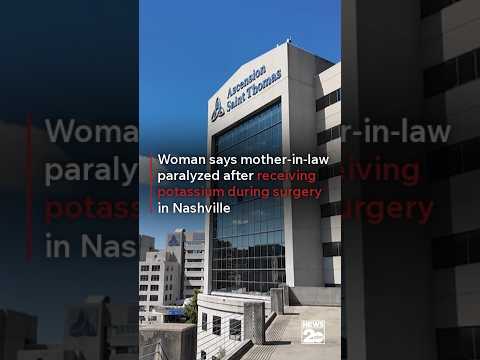
Four patients who came to Ascension Saint Thomas Hospital Midtown in Nashville for routine joint replacement surgery were injected with potassium phosphate instead of a spinal anesthetic, and at least two of them are now paralyzed with another in intensive care, according to CBS News.
The health system confirmed on August 21st that a pharmacy error on August 14th sent potassium phosphate to the operating rooms in place of mepivacaine, the anesthetic the patients were supposed to receive. All four patients “experienced adverse health reactions and received immediate medical care,” the hospital said, adding that a comprehensive review found no other patients were affected. One detail remains unexplained: the Dorton family said the intended anesthetic was bupivacaine, not mepivacaine, and neither account has been publicly reconciled.
The Tennessee Bureau of Investigation has since opened a case. For nurses, that detail lands hard. This is Nashville, the same city where a fatal medication error ended in a criminal conviction against a bedside nurse four years ago.
Want to see more Nurse.org articles in your Google results? Add us as a preferred source.


All four surgeries were scheduled as routine joint replacements. One of the patients was 72-year-old Glenda Dorton of Centerville, Tennessee, who came in for a knee replacement. Her attorney, Mark Walwyn, said she remains hospitalized and is “facing a long and uncertain recovery.”
Dorton’s daughter-in-law, Kristina Dorton, was the first family member to speak publicly. “The joint replacement went wonderful. Her knee is great. The rest of her is not,” she told WKRN. Asked what recovery might look like, she said, “We don’t know what recovery looks like or if there is recovery.”
Clinically, the substitution is about as bad as a medication error gets. Dr. Matthew Byrnes, a surgeon at Catalina Island Health in California with no connection to the case, told WSMV that “infusing it straight into the spine, you can imagine it destroying the spinal cord.” He also named the problem every nurse recognizes from the med room: “If you didn’t have it labeled, you wouldn’t know the difference between 95 percent of medications.”
That is not a new lesson. Concentrated potassium has been treated as a high-alert medication for decades, and the very first Joint Commission Sentinel Event Alert addressed deaths from concentrated potassium chloride injection, which is why the drug was pulled from floor stock in hospitals nationwide.
>>Listen to The Latest Nurse News Podcast
Ascension Saint Thomas says it self-reported to state regulators. The Tennessee Bureau of Investigation opened its case after receiving information from the Tennessee Health Facilities Commission, whose investigators were on site at the hospital. The TBI has described the investigation as active and ongoing. No one has been charged, no wrongdoing has been established, and nothing alleged has been proven in court.
Hospital President and CEO Dr. Shubhada Jagasia said the organization “identified the cause and have implemented corrective safeguards.” In a later statement, the hospital said, “Our hearts remain entirely with the four patients and families impacted by the recent event.”
Those safeguards, as the hospital described them, are three changes any nurse would recognize as standard high-alert practice: isolated storage of high-alert medications in separate, distinctly marked locations; a mandatory hard stop and escalation whenever a spinal medication scan triggers an alert; and independent dual verification by a second trained pharmacist on spinal medication workflows.
The scan alert detail is the one worth watching. The hospital has not said whether a scan alert fired before those syringes reached a patient. But a hard stop is only being added now, and that is the first question any nurse would ask.
The nursing world watched Nashville once before. In 2022, former Vanderbilt University Medical Center nurse RaDonda Vaught was convicted of criminally negligent homicide and gross neglect of an impaired adult after she gave vecuronium instead of Versed to 75-year-old Charlene Murphey. She was sentenced to three years of supervised probation, and the American Nurses Association (ANA) warned at the time that criminalizing medical errors sets a dangerous precedent and discourages the reporting that makes systems safer.
>>Listen to RaDonda Vaught: Life After Nursing, Shame, and the Mistake Every Nurse Fears
The Ascension case is different in an important way. The hospital has publicly located the failure in the pharmacy, not at the bedside, and it self-disclosed rather than waiting to be caught. But the presence of the TBI means the question of individual criminal liability is on the table again in the same jurisdiction, and nurses, pharmacists, and anesthesia providers are all somewhere in that chain.
There is a practical takeaway too. Dr. Byrnes put it bluntly: “The last person standing has the ultimate responsibility.” That is the uncomfortable reality of administration. A correctly labeled syringe handed off from pharmacy still gets pushed by a clinician, and independent double checks, barcode scanning, and refusing to click past an alert remain the last real barrier. If your unit treats scan overrides as a workflow annoyance rather than a stop sign, this is the story to bring to your next safety huddle.
It is also a reminder to know your own protections: your state’s peer review and just culture policies, your employer’s error reporting process, and whether your professional liability coverage is personal or relies entirely on your employer.
🤔 Nurses, how often does your unit actually honor a barcode scan alert as a hard stop instead of overriding it to keep the case moving? Tell us what really happens on your floor.
If you have a nursing news story that deserves to be heard, we want to amplify it to our massive community of millions of nurses! Get your story in front of Nurse.org Editors now – click here to fill out our quick submission form today!
-
Published on
August 24, 2026
Written by