Becoming a Nurse After Incarceration: What I Wish I Had Known
Editor’s note: The author wrote a memoir about her incarceration, 84 Days: The Fall, and earns income from it and from paid speaking through her company, Rise Anyway Enterprises. She also founded the Rise Anyway Foundation, which supports people returning home from incarceration. Neither is promoted in this essay.
No one told me how many times I would have to explain the worst chapter of my life before someone would give me the opportunity to write another one.
I knew becoming a nurse would require studying, sacrifice, and hard work. I did not know how often it would require sitting across from someone, hoping they could see more than what appeared on a background check.
Before I became a registered nurse, I was a medical assistant. Then a decision I believed was helping someone changed my life. I spent eighty-four days incarcerated.
My time in custody lasted less than three months. The consequences lasted much longer.
After my release, rebuilding my life took years. In time, I returned to school, earned my nursing degree, and pursued licensure.
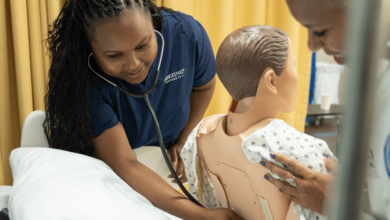
Today, I am a registered nurse licensed in multiple states. Those credentials represent an accomplishment I am proud of. They also represent years of disclosures, applications, interviews, and patience that no one can see when they look at my badge.
People often ask how I became a nurse after incarceration. The short answer is education, hard work, and persistence. The real answer is harder to explain. It lives in the waiting, the explaining, and the fear of hearing no. That is the part I wish someone had prepared me for.
Want to see more Nurse.org articles in your Google results? Add us as a preferred source.

A rejection can arrive in a short email or a brief conversation. The person delivering it moves on to the next task. For the person receiving it, the moment can last much longer.
One rejection arrived after a conversation I thought had gone well. I had prepared carefully, answered every question honestly, and left feeling hopeful. Later, a short email informed me that the organization had decided to move forward with other candidates.
No explanation was provided.
I remember staring at the screen, wondering whether the decision reflected my qualifications, my background, or both. The uncertainty was often harder than the answer.
Rejection did not get easier simply because I had experienced it before. Continuing required learning how to recover without allowing someone else’s decision to become my entire understanding of myself.
When I graduated from nursing school, one of my instructors, who also served as my advisor, told me how proud they were that I had continued my journey. But the congratulations came with a warning: graduating did not guarantee that the nursing board would approve me because of my background.
I nearly let the fear of being told “no” keep me from becoming a nurse. I had already been incarcerated. Now, even after finishing nursing school, I was afraid my past would cost me the future I had worked for. Before the nursing board reviewed my application, I was already preparing myself for rejection.
Eventually, through self-reflection and encouragement, I reached out for help with the application process. I decided to be honest about my background, explain the circumstances, and provide everything that was requested of me.
What I remember most about that process is that I felt heard. I had expected to be judged by what appeared on paper. Instead, I was given the opportunity to tell my story.
The board approved me to sit for my licensing examination.
That approval allowed me to take the step I had been so afraid to pursue.
I wish I had known how much the fear of hearing no could delay my life. I could not control the board’s decision. I could only give myself the opportunity to receive one.
Disclosure did not end with that application.
I revisited my history for employment, additional state licenses, and professional advancement. Sometimes I spoke with one person. Sometimes I sat in meetings with several people evaluating whether I deserved a chance.
There is a unique exhaustion that comes from repeatedly asking people to see beyond a mistake. I wanted them to recognize my determination, my qualifications, and my ability to care for patients. Honesty sometimes left me feeling exposed, even when I had done everything asked of me.
>>Listen to The Latest Nurse News Podcast
A record reduces a complicated experience to a few words, and those words can shape an opinion before a conversation begins.
The person reading may see a charge. I remember the circumstances, the decisions I made, and what I believed I was doing at the time. When someone I knew called me for help with a gunshot wound beyond what I could manage, I drove him toward Toledo instead of to the nearest hospital. Later, when police questioned me, I was not truthful.
Good intentions do not erase consequences. I have never asked anyone to pretend otherwise. But people are more complicated than the worst thing they have done. Growth, accountability, and time matter, and none of them fit neatly into a few lines on a report.
People with a record often hear broad statements about what they can and cannot become. When you are frightened, those statements can sound like final decisions.
What I needed were specific answers:
- What does the application require me to disclose?
- What documentation will I need?
- Who can explain the requirements for school admission, clinical placement, employment, and licensure?
Your state board of nursing and your state’s nurse practice act are the places to begin for licensure information.
My experience cannot guarantee anyone else’s outcome. But I hope it encourages someone to seek accurate information before accepting that their future has already been decided.
What I Want People to Understand
Nursing requires trust, sound judgment, competence, and accountability. I respect the responsibility involved in deciding who enters this profession.
Early in my nursing career, I cared for a patient who was frustrated, guarded, and reluctant to engage with the healthcare team. On a busy unit, providers often moved in and out of the room quickly, and the patient felt unheard, unseen, and misunderstood. I wondered whether race, age, or gender had shaped how this patient had been treated before, and how they expected to be treated now.
It would have been easy to focus on the behavior in front of me. Instead, I approached that patient with curiosity rather than assumptions, which helped build trust and opened the door to better communication. My experience taught me that a person’s hardest chapter rarely tells the whole story.
I carry that awareness into every patient interaction.
For anyone still trying to get through the door, I hope my story offers honesty and possibility. The journey may demand more than you expected. You deserve accurate information, fair consideration, and the opportunity to show who you are today.
I needed those things, too.
🤔 Nurses: what helped you move forward when your past, or a patient’s, seemed to close a door? Share your experience in the comments.
If you have a nursing news story that deserves to be heard, we want to amplify it to our massive community of millions of nurses! Get your story in front of Nurse.org Editors now – click here to fill out our quick submission form today!
-
Published on
November 2, 2026
Written by