Poll: 59% of Nurses ‘Less Likely’ to Seek Graduate Degree Because of DoED Loan Policy
Updated 3/2/26
The public comment period for the Department of Education’s proposed federal loan limits for graduate nursing programs closes tonight, March 2, 2026, at 11:59 p.m. ET.
>> Submit a Public Comment Here!
With more than 2,300 nurses weighing in on our Nurse.org poll* over a three-month period, and thousands submitting formal comments, this is the last day to tell federal officials how these changes could affect your ability to pursue an MSN, DNP, CRNA, or other advanced degree. Here are the updated results from our poll.
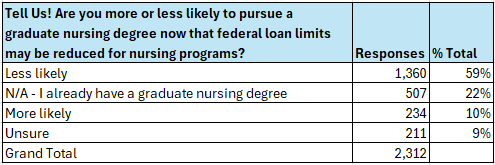
When asked whether the proposed federal loan limit reductions would affect their decision to pursue graduate education, 2,312 nurses answered as follows:




- 59% said they are less likely
- 10% said they are more likely
- 9% said they’re unsure
- 22% already have a graduate degree

The concern is clear: many nurses who would traditionally fill the APRN, CRNA, NP, and educator pipeline say this new policy could stop them from advancing their careers.
Among nurses who shared their license/degree type, the group that said they’re less likely to pursue graduate education included:
- RN (BSN): 40%
- RN (ADN): 16%
- MSN: 11%
- LPN: 10%
- Nursing student: 5%
- RN (Diploma): 4%
- PhD-prepared nurses: 1%
- DNP-prepared nurses: 1%
- CNA: 2%
- N/A or none of the above: 8%
The majority of nurses who say they’re now discouraged are RNs with BSN or ADN degrees—the population most likely to become future APRNs or nurse educators.
When asked, “What concerns you MOST about this change?” nurses chose:
- 43% – Negative message about the value of nursing as a profession
- 22% – Reduced ability to take out student loans / higher personal debt burden
- 21% – Fewer nurses entering advanced/practitioner roles
- 11% – Less diversity in nursing
- 2% – Other (with many commenting “All of the above”)

Among nurses who indicated their license/degree type, those who selected “Negative message about the value of nursing as a profession” included:
- RNs (BSN): 32%
- MSNs: 27%
- RNs (ADN): 13%
- LPNs: 7%
- RN (Diploma): 6%
- DNPs: 5%
- Nursing students: 3%
- N/A or none: 3%
- PhD-prepared nurses: 3%
- CNAs: 1%
The takeaway: nurses at every level—from ADN-prepared RNs to PhDs—feel this policy diminishes the profession.
Though a handful of nurses wrote-in “all of the above” about their concerns, others raised concerns that go beyond any single poll option and cut across cost, access, and respect for the profession:
- On the cost and accessibility of graduate education: “Fewer nurses pursuing PhD degrees as they require longer time commitments and cost more over time.”
- On the complexity of the issue: “I see the reasoning of the DoED because the cost is far too high.”
- On diversity and workforce impact: “Less availability of student loans for underprivileged persons… less diversity due to less accessibility… fewer graduate-level nurses being trained each year and compounding the existing workforce crisis.”
- On faculty shortages: “Limited nursing instructors.”
- On distrust and misinformation: “Media lying about what the bill does” and “The negative political myths being presented. I’m tired of the one-sided lies.”
- On program costs and worsening shortages: “Programs will not reduce their costs. Shortages will just increase.”
- Outlier sentiment: “Nothing at all. Graduate nurses are parasites on society.”
These responses illustrate the mix of frustration, distrust, and deep concern many nurses feel about the policy and its potential ripple effects.
The data is clear:
- Nearly 60% of nurses say they’re less likely to pursue graduate education as a result of the policy change, threatening the future workforce of APRNs, CRNAs, NPs, CNMs, nurse educators, and PhD-prepared nurse scientists.
- Nurses fear the message this policy sends, and many worry it signals that advanced nursing education is not valued.
- Concerns about debt, diversity, and access point to broader issues that could reshape the profession for years to come.
Nurses remain strong advocates for themselves and their patients—and this poll shows they’re ready to push back when policies threaten the future of nursing education.
As the public comment period closes tonight, what happens next is largely out of nurses’ hands—but how nurses respond is not. You can stay engaged by tracking updates from major nursing organizations, talking with your school’s financial aid office, exploring alternative funding options (like employer tuition assistance, scholarships, or PSLF‑eligible roles), and continuing to speak up about what it really costs to train and retain advanced practice and graduate‑prepared nurses.
Whatever the final rule looks like, nurses’ voices and experiences will be critical in shaping how schools, employers, and policymakers respond in the months and years ahead.
>> Submit a Public Comment Here!
🤔 Nurses, what do you think about these poll results? Share your thoughts in the discussion forum below.
If you have a nursing news story that deserves to be heard, we want to amplify it to our massive community of millions of nurses! Get your story in front of Nurse.org Editors now – click here to fill out our quick submission form today!
* Summary results from poll of 2,312 nurses conducted on Nurse.org from November 27, 2025 to March 2, 2026.
Nurse.org Quick Polls