Montana Nurse Impaled by Trekking Pole Hiked 10 Miles to Safety Using His Nursing Instincts
A hike up Montana’s tallest mountain turned into a potentially life-threatening emergency for Montana nurse David Cifaldi after a freak accident left him impaled through the side by his own trekking pole. Despite the severe injury, he hiked about 10 miles over rugged terrain with the pole still lodged in his torso before reaching medical care.
The accident happened while Cifaldi was climbing Granite Peak, where he slipped on loose rock and was impaled through the left side of his torso by one of his trekking poles. He left the pole in place, monitored his condition, and, with the help of his hiking partners, began the long descent to safety.
Want to see more Nurse.org articles in your Google results? Add us as a preferred source.

Montana nurse David Cifaldi, 32, a wound care nurse at St. Vincent Regional Hospital in Billings, was climbing Granite Peak with two friends on July 20 when he slipped on loose rock and was impaled by one of his trekking poles, which passed through the muscle along his left side and out his back. Cifaldi told Backpacker that “my nurse brain kicked on pretty quick” as he began assessing his injuries, including whether the pole had punctured his chest or lung. He said he took several deep breaths, checked for significant bleeding, and walked around briefly to make sure he wasn’t becoming dizzy or lightheaded before determining the pole appeared stable.

“As soon as I was able to kind of self-assess and really kind of establish that, ‘Hey, this is not life-threatening right now,’ I was pretty convinced at that point that I was going to get off that mountain and I was going to do it under my own power,” Cifaldi told Montana station KTMF.
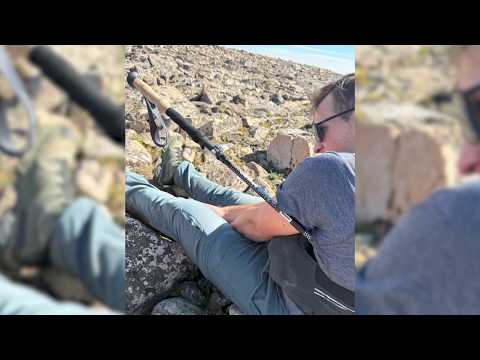
Thankfully, Cifaldi wasn’t hiking alone. His friends, Brad Reich and Jesse Ross, stayed with him throughout the descent while Ross used a Garmin satellite communicator to contact search and rescue.
Over the next six and a half hours, the group carefully made their way about 10 miles down rugged terrain with the trekking pole still lodged in Cifaldi’s torso.
His hiking partners later said his calm demeanor helped everyone stay focused during the emergency. According to a GoFundMe set up by a friend, Cifaldi even asked one of his hiking partners to walk ahead and warn approaching hikers, so that children on the trail wouldn’t unexpectedly encounter his injury.
Once they reached lower elevation, Cifaldi was transported to a hospital in Columbus before being transferred to Intermountain Health in Billings, where trauma surgeons safely removed the trekking pole. According to reports, the pole remained in place for nearly nine hours.
He is now recovering at home and may need additional surgery.
>>Listen to The Latest Nurse News Podcast
As someone who has spent years hiking throughout Montana, including hundreds of miles in Glacier National Park, this story is also a reminder that emergencies can happen to anyone. Granite Peak is one of the most technically demanding climbs in the Lower 48, but even on easier trails, a simple misstep or an unexpected fall can quickly become a serious situation.
No matter where you’re hiking, a little preparation goes a long way. A few things I never head into the mountains without are:
- A hiking partner whenever possible.
- A satellite communicator, such as a Garmin inReach, whenever I’ll be outside reliable cell service.
- Bear spray that’s easy to access, not buried in my backpack. Just as importantly, I make sure I know how to use it before I ever need it.
- A basic first aid kit.
- Someone back home who knows exactly where I’m hiking and when I expect to return.
- Plenty of water, layers for changing weather, and the willingness to turn around if conditions aren’t right.
One detail that stood out to me was that Cifaldi wasn’t alone. His hiking partners stayed calm, contacted search and rescue, and helped him safely make it off the mountain. In my experience, having the right people with you, carrying the right equipment, and being prepared for the unexpected can make all the difference. That’s true whether you’re hiking Glacier National Park, climbing Granite Peak, or exploring your favorite local trail.
Cifaldi’s story is an incredible example of how nursing skills extend far beyond the hospital. Faced with a traumatic injury in a remote wilderness setting, he didn’t let panic take over. Instead, he relied on the clinical assessment skills he said he developed through his nursing experience. He checked for significant bleeding, evaluated how he was feeling, looked for signs of shock, and made decisions based on what he was seeing rather than reacting out of fear.
His story also reinforces an important principle of emergency care. In most situations, emergency guidance recommends leaving an impaled object in place and stabilizing it until the patient can be treated by medical professionals, since removing it in the field can worsen bleeding or cause additional injury. Exceptions include situations where the object is preventing CPR or obstructing the airway.
One of the things I value most about nursing is that the skills we develop can be useful far beyond the hospital. Staying calm, thinking critically, and assessing a situation can make a difference in unexpected emergencies both on and off the clock.
Cifaldi’s story is certainly extraordinary, but the takeaway is not that every nurse should be able to hike 10 miles with a traumatic injury. Rather, it highlights how preparation, sound judgment, and calm decision-making can matter in emergencies.
🤔 Have you ever relied on your nursing instincts in an emergency outside of work? Tell us what happened in the comments.
If you have a nursing news story that deserves to be heard, we want to amplify it to our massive community of millions of nurses! Get your story in front of Nurse.org Editors now – click here to fill out our quick submission form today!
-
Published on
July 29, 2026
Written by