‘We Waited and We Waited’: Nurse Recalls Her 9/11 Shift Treating Pentagon Survivors
Every person can clearly remember where they were and what they were doing on September 11th, 2001. It’s a day we will never forget. It has become ingrained in our minds and is a constant reminder of how life can truly change in a split second.
I remember sitting in AP World History and our principal coming over the loudspeaker announcing that the school was on lockdown. No one had details but we all knew something was serious. Teachers gathered in the hallway and a TV was turned on to see what the rest of the country was seeing. Living only 90 minutes from New York City, many of my classmates had parents and family members working in the City. The next few hours changed their lives forever.
Now, twenty-five years later, we celebrate the heroes both in the air and on the ground. We remember those that lost their lives. We remember. We never forget.
Want to see more Nurse.org articles in your Google results? Add us as a preferred source.

When American Airlines Flight 77 slammed into the Pentagon, a Washington, D.C. surgeon and a nurse who worked that morning told News4’s Aimee Cho that the detail they cannot shake is not the news footage. It is the smell.
The plane hit the Pentagon at 9:37 a.m. on that fateful day, killing 184 people. A few miles away at MedStar Washington Hospital Center, staff cleared beds, hung IVs, and braced for a wave of casualties that took an agonizingly long time to arrive.
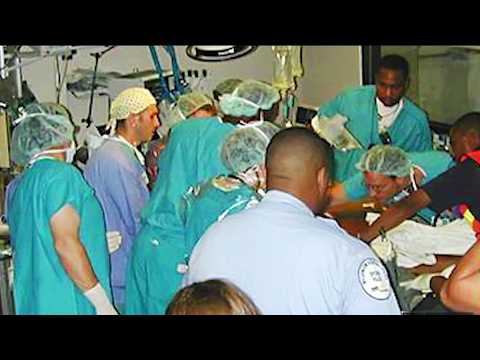
“We waited and we waited. And then nobody came, and we all started having this sort of sense of doom that nobody was coming because they couldn’t get there,” Christine Owen, a nurse who worked at MedStar that day and is now a nurse practitioner, told NBC4 Washington.

Source: WUSA9
For Dr. Jack Sava, now chair of the surgery department at MedStar Washington Hospital Center, 9/11 was his first day on the job. His wife was at the Capitol. He was standing in a trauma bay trying to figure out how to run a team he had just met.
“What most of us remember at a visceral level is the smell of jet fuel. Every patient reeked of it,” Sava said.

Source: WUSA9
He also described something clinicians rarely get to name out loud during a disaster: the staff were victims of the same event they were responding to. “One of the things I remember most was how everyone in the room was worried about their loved ones,” Sava said. Speaking on the 20th anniversary in 2021, he told WJLA the event “was happening to everybody in the room and it was happening to the entire country.”
When patients did arrive, the most seriously burned went to the only adult burn center in the Washington region. MedStar’s Burn Center treated 10 people injured in the Pentagon attack, part of a program that now cares for roughly 1,300 burn patients a year across the District, Southern Maryland, Northern Virginia and Eastern West Virginia.
These were not quick admissions. The last Pentagon patient was discharged from the Burn Center on December 17, 2001, more than three months after the attack, according to an Army medical history reported by Military.com. Survivors were left with permanent injuries including lost fingers, corneal damage and extensive scarring, meaning nursing teams carried these patients through months of dressing changes, grafting, infection watch and rehab long after the news trucks left.
Among the Pentagon patients flown to MedStar was Racquel Kelley, a 32-year-old Defense Department computer specialist and new mother who was working about 700 feet from the impact point. Washingtonian reported that Kelley suffered flash burns to her feet and scalp and that toxic smoke had swollen her airway to an opening “probably smaller than a dime.” She was flown out by a MedStar medevac crew of pilot Ted Chittick, paramedic Barbara Brown and flight nurse Tammi Rippeon, was placed on a ventilator in the ICU, spent almost a week in the hospital, and has spent the years since managing post-traumatic stress. “I was a mess. I was a wreck. I was scared,” she said.
Owen has stayed connected to that day and to the people she worked beside. “We thank God for our friendships and our colleagues and what we were all able to do that day to help others,” she told News4.
>>Listen to The Latest Nurse News Podcast
Nurses weren’t only on the front lines that day in the hospitals, but were on the flights and working in the World Trade Center.
In a statement provided to Nurse.org, American Nurses Association President Jennifer Mensik Kennedy honored them by name:
As we mark the 25th anniversary of 9/11, we honor and remember every life lost and hold especially close the nurses who died that day: Touri Bolourchi, Lydia Estelle Bravo, Ronald Bucca, Gregory Buck, Christine Egan, Carol Flyzik, Debra Lynn Fischer Gibbon, Geoffrey Guja, Stephen Huczko, Kathy Mazza and Michael D. Mullan. Some were serving as first responders, rushing toward danger to save others, while others were going about an ordinary morning when their lives were tragically cut short.
We also remember the nurses whose skill, courage and compassion helped carry New York City, Somerset County, Arlington and our nation through unimaginable tragedy and grief.
Their work did not end when the smoke and dust cleared. Twenty-five years later, nurses continue to care for those living with the physical and emotional effects of 9/11. We remain profoundly grateful for the nurses who answered the call that day—and for those who continue to bring healing, dignity and hope to affected individuals, families and communities.
—Jennifer Mensik Kennedy, PhD, MBA, RN, NEA-BC, FAAN, president, American Nurses Association
AMN Healthcare’s tribute tells each of their stories.
The most useful thing in these accounts for working nurses is not the horror. It is the operational lesson. Mass casualty events almost never begin with a clean surge. They begin the way Owen described it, with a fully mobilized unit standing in an empty hallway, not knowing whether the patients are coming, whether more attacks are underway, or whether their own families are safe.
Surge capacity was the gap that day. Dr. Jeff Shupp, director of the MedStar Burn Center, has said the event exposed “how few beds we had available on 9/11, and our ability to surge was not mature.” Burn care itself has moved considerably since then, including spray-on skin and improved grafting techniques, but bed availability and staffing remain the choke point in any regional disaster.
There is also a long tail to disaster response that nurses should know about, for their patients and for themselves. Responders and survivors of the 9/11 attacks in New York, at the Pentagon and in Shanksville can still enroll in the federal World Trade Center Health Program, which provides no-cost monitoring and treatment for certified 9/11-related conditions, and the program continues to add thousands of members each year as new illnesses surface decades later. If you worked a disaster response, documentation and follow-up matter years down the line.
Finally, there is the psychological piece. Sava’s observation that everyone in the room was worried about their own family is the definition of a shared-trauma event, the kind of incident where the clinician and the community are hit at the same time. Twenty-five years later, the staff who were there still check on each other around the anniversary. That informal peer support is often what carries a unit through, and it is worth asking whether your facility has anything more formal in place before the next mass casualty call comes in.
🤔 If a mass casualty alert went out at your facility tomorrow, would your unit be ready, or would you be improvising like the teams were on 9/11? Share your thoughts in the comments.
If you have a nursing news story that deserves to be heard, we want to amplify it to our massive community of millions of nurses! Get your story in front of Nurse.org Editors now – click here to fill out our quick submission form today!
-
Published on
September 11, 2026
Written by