Nurses & Doctors Among 455 Charged in $6.5 Billion DOJ Healthcare Fraud Takedown
The U.S. Department of Justice announced on June 23, 2026 that it had charged 455 defendants in connection with more than $6.5 billion in alleged health care fraud, the largest coordinated health care fraud takedown the agency says it has ever run. Among those charged are 90 doctors and other licensed medical professionals.
Want to see more Nurse.org articles in your Google results? Add us as a preferred source.
For nurses, this is not a distant headline. While some nurses were directly involved, the schemes named by prosecutors run straight through the corners of the system where nurses spend their shifts: home health visits, hospice enrollment, wound care, telehealth orders, and behavioral health services. When the government alleges that care was billed but never delivered, or delivered to people who did not need it, the paper trail often runs through clinical documentation that nurses help create.
All 455 defendants are charged, not convicted, and a charge is only an allegation. Each person is presumed innocent unless and until proven guilty in court. Here is what the takedown actually says, and why it matters to your license and your workplace.
The Justice Department says the operation spanned 56 federal districts and 45 states and territories, with all 50 state Medicaid Fraud Control Units taking part. The government reports seizing roughly $182 million in cash, luxury vehicles, jewelry, and other assets tied to the alleged schemes.
The FBI also added two fugitives to its Most Wanted Fraudsters list: Khalid Ahmed Satary, tied to an alleged $547 million genetic testing scheme and believed to be in the United Arab Emirates, and Emylee Thai, a former lab owner whose company allegedly billed Medicare about $142 million and collected roughly $95 million, who is believed to be in Vietnam. “The American people and the world are our best sources of information,” FBI Director Kash Patel said. Acting Attorney General Todd Blanche added, “If you seek to harm or cheat Americans, we will find you.”
“There is no case too big, no scheme too complex, and no hiding place too remote for our fraud-fighting team,” Criminal Division official Colin McDonald said.
>>Listen to The Latest Nurse News Podcast
The Schemes: Wound Grafts, Hospice, and 11-Second Heart Tests
Some of the largest dollar figures come from an alleged amniotic wound allograft scheme. Prosecutors say 11 defendants across six districts billed Medicare roughly $4 billion and collected more than $2 billion, marking products up by about 2,000 percent and paying kickbacks to marketers and providers.
Other cases hit closer to bedside care. In a hospice case, defendant Oren David Shachar allegedly generated $27.7 million in fraudulent Medicare claims by using deceased beneficiaries’ identities and creating backdated medical records. An Illinois behavioral health case alleges $67 million in false Medicaid claims for services never provided. And in a cardiovascular testing case, the government says results were approved in as little as 11 seconds, with one patient who showed signs of an enlarged heart cleared for athletics and later suffering cardiac arrest.
You can watch the Justice Department announce the results below.
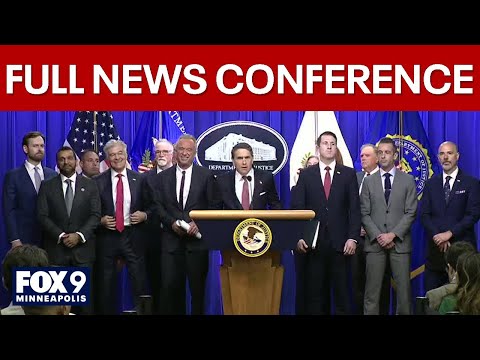
The DOJ’s national health care fraud takedown included nurses and nurse practitioners among the defendants, but the public release does not provide a complete nurse-by-nurse roster in the main announcement. Related DOJ coverage identifies at least one Nevada nurse practitioner and one Texas nurse practitioner in separate cases tied to the takedown, while a separate California case names a licensed vocational nurse in a hospice fraud matter. Here is what is confirmed in the press release:
- Southern District of Texas: a nurse practitioner was charged in a $906 million allograft scheme.
- Middle District of Florida: three defendants were charged in an $118 million allograft scheme, including a nurse practitioner.
- Opioid diversion cases: 36 defendants, including 28 licensed medical professionals, were charged.
The phrase “90 doctors and other licensed medical professionals” is the part of this story nurses should sit with. Registered nurses, nurse practitioners, and other licensed clinicians fall under that umbrella, and the settings under scrutiny, home health, hospice, wound care, and telehealth, are nursing-heavy by design. These are workplaces where a nurse’s signature, assessment, or plan of care can become the documentation a billing claim rests on.
That matters for your license and your career. Federal officials say they are moving away from a “pay and chase” approach toward data analytics that flag suspicious billing patterns before claims are paid. In practice, that means tighter scrutiny of the orders nurses are asked to sign, the visits they document, and the supplies they help order. If something feels off, a wound product that seems wildly overpriced, an order for a patient you have never seen, or pressure to backdate a note, those are the exact red flags prosecutors described in these cases.
Protecting yourself is straightforward but not always easy: document only what you actually did and observed, raise concerns through compliance channels, and know that “my employer told me to” is rarely a defense when a license is on the line. Most nurses will never come near a fraud scheme. But understanding how these cases are built, and where nursing documentation fits, is part of practicing safely in a system under unprecedented federal scrutiny.
🤔 Have you ever been asked to sign off on an order or a note that didn’t sit right with you? How did you handle it? Tell us in the comments.
If you have a nursing news story that deserves to be heard, we want to amplify it to our massive community of millions of nurses! Get your story in front of Nurse.org Editors now – click here to fill out our quick submission form today!
Crime
-
Published on
June 23, 2026
Written by
Nurse.org Staff