Nurses Say This ICU Nurse’s Trial Testimony is a Masterclass. Here’s What She Did Right
Trigger warning: this article references a criminal trial involving child deaths and a suicide attempt. If you or someone you love is struggling with postpartum mental health symptoms, please visit Postpartum Support International, call their 24/7 helpline at 1-800-944-4773, or text “Help” to 800-944-4773.
As nurses, we are told to document like we might have to defend our charting in court someday. But not every nurse actually has to face that moment.
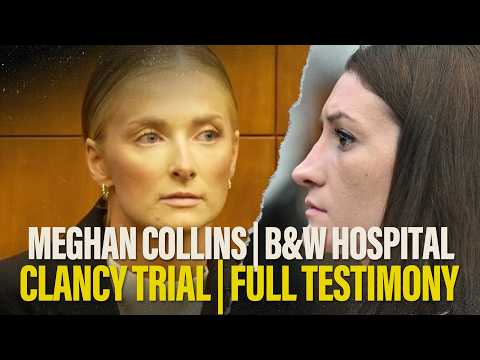
Meghan Collins, a day shift ICU nurse at Brigham and Women’s Hospital in Boston, did. Collins testified in the trial of Lindsay Clancy, one of the most-watched criminal trials in recent memory, and both nurses and the public are praising her for how she represented the nursing profession.
On Monday, August 3, Collins testified as a witness for the Commonwealth in the trial that involves a fellow member of her profession: Lindsay Clancy was a former labor and delivery nurse, now charged with murder in the deaths of her three children in January 2023.
Clancy’s trial has dominated headlines for weeks, and Nurse.org covered what her case has surfaced about broader mental and maternal health conversations among nurses on the night shift. But this story is not about the defendant. It is about the nurse who took the stand, and why, within days, the nursing community turned her testimony into a viral teaching moment.
Want to see more Nurse.org articles in your Google results? Add us as a preferred source.

An ICU Nurse Took the Stand and Did What Nurses Do
Collins was one of several Brigham and Women’s clinicians who cared for Clancy after she was transferred to the Boston hospital following her suicide attempt. Collins testified that she began treating Clancy on January 25, 2023, and described the patient’s critical condition, including sedation, intubation, visible injuries to the neck and wrists, and post-extubation ICU delirium that required restraints.
Her testimony was precise and stayed inside the boundaries of what she observed and documented. She described Clancy’s agitation and ICU delirium as a common issue among intensive care patients, one that waned as days passed and care continued. A Brigham and Women’s psychiatrist who testified after her, Dr. Sejal Shah, confirmed the same clinical picture.
When questioned by the prosecution, Collins confirmed that the cuts to Clancy’s neck and wrists did not require constant attention and that the more significant clinical concern was stabilizing her spinal injuries. Under cross-examination from defense attorney Kevin Reddington, Collins confirmed details recorded in the chart, including that Clancy sought to change her healthcare proxy from her husband to her parents during the hospitalization.
Prosecution question, defense question, it did not matter. The answers came from the same place: the nurse’s precise and professional charting.
>>Listen to The Latest Nurse News Podcast
Within days, clips of Collins’ testimony spread across nursing social media. A video from creator Nurse Johnn praising her testimony drew nearly 900,000 likes, describing nursing as a profession built on “judgment, integrity, and advocacy” and holding up Collins as proof of what that looks like under pressure.
@nurse.johnn Some moments remind the world what makes nursing such a unique profession. Watching ICU Nurse Meghan Collins testify in the Lindsay Clancy trial was one of those moments. Her testimony reflected the critical thinking, accountability, professionalism, and ethical responsibility that nurses carry every single day. Despite managing countless responsibilities, making rapid decisions, and caring for patients in high pressure environments, nurses are expected to think critically, document objectively, and remain accountable for every action. It was a powerful reminder that nursing is far more than completing tasks. It’s a profession built on judgment, integrity, and advocacy. No matter the circumstances, nurses are trained to protect their patients, uphold standards of care, and stand behind their clinical decisions with confidence and professionalism. Today was a reminder of why nursing is such a respected and extraordinary profession. #nursejohnn #nurse #nursing #healthcareworker #lindsayclancy ♬ original sound – nurse.johnn
One of the most famous moments of Collins’ testimony has been stitched and shared all across social media as the nurse stood with a straight posture, slicked-back hair, and confident speech as she delivered the line:
“I do not diagnose.”
@rn_bene As nurse kindly know you do not diagnose, always ensure to follow physician orders but to question what is questionable for clarification. #meghancollins #lindsayclancystory #kevinreddington #nurse #safety ♬ original sound – Caffeinated & Called
The reaction from nurses has not been about which side of the case she testified for. Collins was a fact witness, called to describe the care she provided, and nothing more. What resonated with nurses was how calmly and clearly she answered only what she knew from her scope as a nurse.
She did not speculate, editorialize, or reach beyond her scope. When a question fell outside what she observed or documented, she said so.
“Everyone making the point about documentation is great, but also note how she didn’t answer questions she wasn’t asked. Her responses are simple and direct and clear. That’s how documentation should be. Facts only. Assessment findings, not opinions,” pointed out one commenter.
As nurses are trained to do, but may never actually be called to defend in a courtroom, Collins trusted her documentation. Years after a single admission, her charting held up under examination by both sides in a murder trial. Every assessment, every behavioral note, every recorded patient request became part of the legal record, and she could stand behind all of it.
She stayed clinical about a patient the whole country has an opinion on. Collins cared for one of the most scrutinized patients in America, in a room with law enforcement stationed outside, on a unit where staffing was deliberately kept to a small, consistent team.
Her testimony reflected none of the noise. It reflected nursing care, no matter who your patient is.
Nursing school tells every student that the medical record is a legal document. Collins’ testimony is what that abstraction looks like when it becomes literal, and it holds a few practical reminders for every practicing nurse:
- Document behavior, not conclusions. Collins could testify to agitation, delirium, and specific patient requests because those were charted as observations. Objective language, such as “patient pulling at lines, reoriented x3”, survives cross-examination. Interpretive language often does not.
- Chart the requests, not just the vitals. One of the most consequential details in her testimony, the healthcare proxy change request, was in the record because someone documented a patient’s stated wishes. Patient statements about proxies, code status, and care preferences belong in the chart every time.
- You testify to your documentation, not your memory. More than three years passed between Collins’ care of this patient and her testimony. No nurse remembers a shift from 2023. The chart remembers it for you, which is the strongest argument there is for charting in real time, completely, every shift.
- If you are ever called, precision is protection. Answering exactly the question asked, confirming what is in the record, and declining to speculate is not evasiveness on the stand. It is professionalism, and it is what made Collins’ testimony as a nurse a model.
The Clancy trial will end with a verdict that nurses everywhere will debate. But whatever the jury decides, Collins’ twenty-odd minutes on the stand already delivered a separate outcome:
Millions of people, most of whom have never thought about what nurses chart or why, watched a nurse demonstrate that the profession’s standards hold up in the highest-stakes room there is.
🤔 Have you ever had your documentation reviewed in a legal case? Share your thoughts or experiences in the discussion forum below.
If you have a nursing news story that deserves to be heard, we want to amplify it to our massive community of millions of nurses! Get your story in front of Nurse.org Editors now – click here to fill out our quick submission form today!
-
Published on
August 11, 2026
Written by