Travel Nurse Disarms Armed Suspect After Witnessing Assault Near Vermont Nursing Home
For most nurses, the end of a shift means heading home. For travel nurse Leceadricke Young, it meant stepping into a life-threatening emergency after he witnessed an alleged assault near the nursing home where he had just finished his shift.
Likely using defensive tactics he learned years before becoming a nurse, Young intervened, disarmed an armed suspect, and helped protect the victims until police arrived.
While his actions have drawn praise across Vermont, they also raise an important question many nurses can relate to: What do you do when an emergency happens after your shift ends?
Want to see more Nurse.org articles in your Google results? Add us as a preferred source.


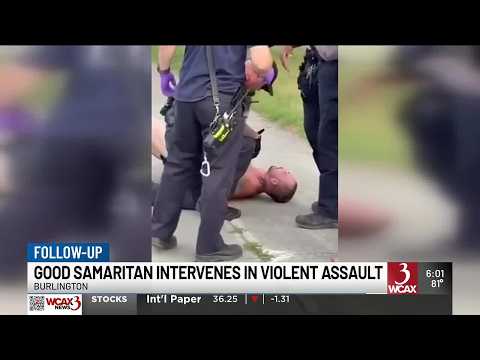
Young had just left Elderwood Nursing Home in Burlington, Vermont, on Friday, July 17, when he witnessed what police say was a violent domestic assault on North Avenue near Gosse Court.
According to local news reports, Young saw a man allegedly grab a woman by the throat and slam her to the ground while children were nearby. “Saw him grab her by the throat, slam her down. So, in the process of doing that, I’m like, it’s a woman, let me stop,” Young told WCAX.
Young approached the woman alongside a fire captain who had also stopped to help. Police say the suspect then produced a knife and turned his attention toward the fire captain.
That’s when Young relied on defensive techniques he learned years earlier through a Mississippi explorer program that partnered with law enforcement and military mentors.
“I knew what to do; we know how to disarm, but it was just like, I never thought I would have to use it, let alone in Vermont, 1,500 miles away from home.” Young says he took the suspect to the ground and flung the knife out of his hand.
According to the police account, a citizen and the firefighter restrained him until officers arrived minutes later, while Young turned his attention back to the victims.
“Made sure she was okay, the kids were okay. Once they were checked out by the paramedics, I was like, okay, I can go home and sleep good at night,” Young said. Police recovered a large hunting-style knife at the scene, according to the Burlington Police Department.
>>Listen to The Latest Nurse News Podcast
Police identified the suspect as 29-year-old Wayne M. Butchino III. According to reports, Butchino pleaded not guilty during his initial court appearance and was ordered held without bail. He was initially held on charges including aggravated assault with a deadly weapon, domestic assault in the presence of a child, and resisting arrest, according to Burlington police, and faces multiple charges including attempted murder following his arraignment.
The Chittenden County State’s Attorney’s Office determined the formal charges ahead of his July 20 arraignment. As with all criminal cases, the charges are allegations, and Butchino is presumed innocent unless and until proven guilty in court.
One of the first lessons we’re taught in nursing is to assess the situation before acting. That assessment doesn’t stop when we leave the hospital.
Nurses are trained to quickly assess situations, recognize when something isn’t right, and respond under pressure. Over time, those skills become second nature. Many nurses have stories about stopping at car accidents, helping strangers in restaurants, assisting during medical emergencies on airplanes, or responding when someone collapses in a grocery store.
But violent situations are different.
While Young’s actions likely prevented additional harm, it’s important to remember that he also had specialized defensive tactics training that most nurses have never received. His ability to safely disarm an armed suspect came from years of prior training—not from nursing school or hospital orientation.
For most nurses, the safest response in an armed confrontation is to focus first on personal safety, alert others, call 911, and avoid physical intervention unless there is no safer option and immediate danger is present. Becoming another victim helps no one. Even when every instinct tells us to help, the first priority is ensuring we don’t create additional victims.
Healthcare workers are also no strangers to violence. According to OSHA, healthcare and social service workers experience significantly higher rates of workplace violence than employees in many other industries. Many nurses have been verbally threatened, physically assaulted, or placed in unsafe situations during their careers.
For travel nurses, this story carries an additional reminder. Every assignment means adapting to a new hospital, a new neighborhood, and an unfamiliar community. Taking time to learn the area around your facility, identify safe parking and walking routes, know where security is located, and trust your instincts can be just as important as preparing for your first shift.
After more than two decades in nursing—including years as a travel nurse—I know our profession attracts people who instinctively want to help. It’s one of the qualities that makes nursing so special.
But one of the hardest lessons we learn is that helping others also means protecting ourselves. Every emergency requires a quick risk assessment, and sometimes the bravest decision is calling for help rather than rushing into danger.
Young’s courage is undeniably inspiring, but his story shouldn’t be viewed as an expectation for nurses. Instead, it’s a reminder that compassion, sound judgment, and situational awareness are some of the most valuable tools we carry—both on and off the clock.
🤔 Have you ever had to step in during a violent or dangerous situation outside of your regular nursing duties? How did you handle it, and would you do the same again? Share your story in the comments.
If you have a nursing news story that deserves to be heard, we want to amplify it to our massive community of millions of nurses! Get your story in front of Nurse.org Editors now – click here to fill out our quick submission form today!
-
Published on
July 27, 2026
Written by