UCSF Nurses Sound Alarm: Patients Found ‘Literally Dead in Gurneys’ Inside Crowded ER
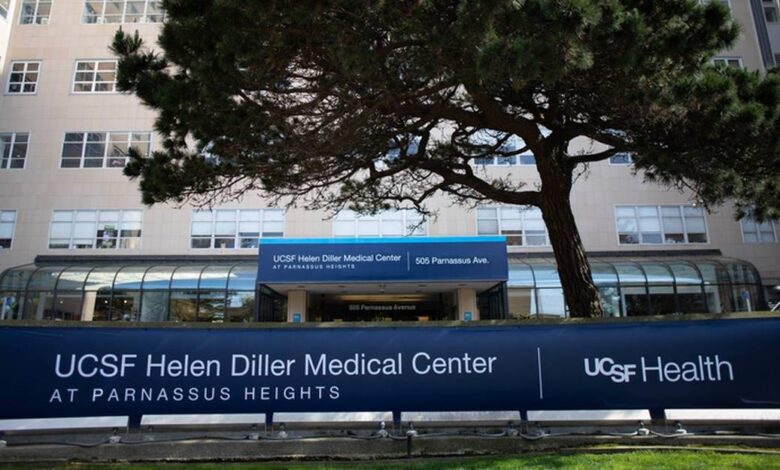
Image source: UCSF Health
Nurses and physicians at UCSF Parnassus Medical Center allege their emergency department has become so chronically understaffed that unsafe staffing conditions contributed to preventable patient deterioration and deaths, according to a new Mission Local investigation in which nine ER providers broke their silence. Providers described finding patients “literally dead in gurneys” after they had arrived at the San Francisco hospital walking and talking, alleging that delayed monitoring contributed to preventable medical emergencies.
The accounts include an elderly woman with a pulmonary embolism left in a hallway for three days without an assigned nurse or any privacy, and a man who lost consciousness in the waiting room and had to be treated on the floor because every bed was full. Dr. Rosny Daniel, a 12-year ER physician at the hospital, told the outlet, “We can no longer pretend that our emergency department is a safe or healthy place for our patients or staff.”
The crisis is unfolding even as UCSF Health posted operating surpluses and broke ground on a new $4.3 billion hospital tower in San Francisco. Hospital systems often separate capital construction funding from operational staffing budgets, though frontline workers argue those distinctions do not change bedside conditions. For nurses watching their colleagues quit and patients deteriorate in hallway gurneys, the contrast between worsening staffing conditions and the system’s financial growth has become increasingly difficult to reconcile.
According to the Mission Local report, the Parnassus ER can fit roughly 50 patients on beds and gurneys when fully staffed, but staffing shortages routinely prevent the unit from running at full capacity. One provider described patients who “decompensated in front of us, and they have had preventable outcomes, including death, because they’re not being monitored.” Another said bluntly, “we don’t have enough staff, we don’t have the ability to monitor all our patients.”

The breakdown is compounded by “boarding,” a practice in which admitted patients occupy ER beds for hours or days while waiting for a room upstairs. A March 2025 San Francisco Standard investigation documented a 63-year-old cancer survivor who waited 52 hours to see a physician at the same ER and lost the ability to walk while lying in a hallway bed. She was eventually diagnosed with multiple myeloma. Patient length of stay across UCSF departments has climbed 40% over five years, outpacing California averages.
>>Listen to The Latest Nurse News Podcast
Nurse staffing on a typical Parnassus ER shift has reportedly dropped from 19 nurses to as low as 11, according to providers cited by Mission Local. Internal data from March showed 14 ER beds sitting unstaffed during overnight hours. According to providers and union representatives cited by Mission Local, more than 200 nursing positions remain vacant hospital-wide, and more than 20 nurses have taken early retirement or resigned in the past year.
Providers say staffing pressures worsened during the tenure of UCSF Health CEO Suresh Gunasekaran, who arrived in 2022 and tightened overtime approvals. Under his leadership, the system swung from a $116 million net loss in 2023 to $809 million in net income in 2025, while operating revenue grew 78%, from $5 billion to $8.9 billion, between 2020 and 2025.
The California Nurses Association, which represents more than 18,000 UC nurses, has been raising alarms about Parnassus staffing since at least 2023. The residents’ union and CNA gathered more than 1,000 signatures on a petition delivered to UCSF leadership on March 31, calling for higher staffing ratios per shift and flexible call-in protocols. According to Mission Local, the union has yet to receive a response.
UCSF told reporters the ER is “appropriately staffed” and that it has launched a rapid treatment area and hired 10 new nurses. Union members say that number falls far short of what is needed. A new hospital tower is expected to expand ER capacity by 71% when it opens in roughly four years.
The Parnassus story is the latest flashpoint in a national fight over emergency department staffing, boarding, and nurse-to-patient ratios. California is the only state with comprehensive mandated nurse-to-patient staffing ratios across hospital units, yet the union says even those rules are being stretched at one of the country’s most prestigious academic medical centers (ranked a top 20 hospital by US News).
For ER nurses, the implications are concrete. Boarding turns emergency departments into ad hoc inpatient units, spreading nurses across patients they cannot safely monitor and raising the risk of adverse patient outcomes, falls, and missed deterioration. When a hospital posts hundreds of millions in net income while leaving more than 200 nursing positions unfilled, it raises broader questions about how staffing decisions are made, how vacancies are reported to regulators, and whether official staffing claims align with frontline conditions.
If you work in an understaffed unit, document refusals of assignment, file Assignment Despite Objection forms where available, and connect with your union or your state board’s complaint pathway. Reports from frontline nurses are often what triggers state inspections and policy change.
🤔 Have you witnessed unsafe staffing or boarding in your ER? Tell us in the comments below.
-
Published on
May 12, 2026
Written by