Jeff Bezos Won’t Stop Talking About ‘A Nurse in Queens’ Making $75K. Here’s Why
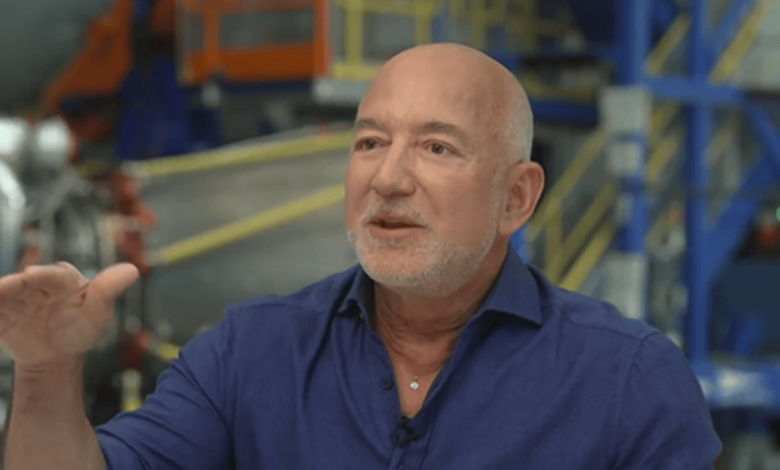
Image source: CNBC
Amazon founder Jeff Bezos cannot stop talking about a nurse in Queens. During a CNBC interview on Wednesday, May 20, 2026, broadcast from his Blue Origin rocket facility in Florida, the billionaire executive chairman repeatedly invoked the same hypothetical worker, a Queens nurse earning $75,000 a year, to argue the bottom half of American earners should pay zero federal income tax.
“Why is a nurse in Queens who makes $75,000 a year paying more than $1,000 a month in taxes?” Bezos asked CNBC anchor Andrew Ross Sorkin. “That’s $1,000 a month that could help with rent, groceries, or anything.”
It was a striking choice of symbol from the world’s fourth-richest person, and it has set off a national conversation about who actually carries the federal tax load, and what role nurses play in it.
It’s also worth noting, before we go further, that Bezos chose a nurse as his everyman. Not a warehouse worker. Not a delivery driver. Not anyone whose working conditions Amazon has more direct influence over. A nurse. Make of that what you will.
The hypothetical nurse came up again and again throughout the wide-ranging interview, which also touched on AI, Amazon, New York City politics, and President Donald Trump. Each time, Bezos used her to make the same point: lower-income workers should not be sending money to Washington at all.
“We shouldn’t be asking this nurse in Queens to send money to Washington,” Bezos said. “There’s something very powerful about zero.”
He backed the proposal with tax distribution data, noting that the top 1% of taxpayers cover roughly 40% of all federal income tax revenue while the bottom 50% contributes only about 3%. “I don’t think it should be 3%,” he said. “I think it should be zero.”
He also pitched the idea as a more direct alternative to government cash transfers. “Instead of universal basic income, how about we stop taxing a nurse making $75,000?” Bezos said.
>>Listen to The Latest Nurse News Podcast
Bezos’s proposal has real legislative company. Sen. Cory Booker (D-N.J.) has introduced the Keep Your Pay Act, which would exempt the first $75,000 of income from federal tax for households filing jointly, with proportional relief for single filers and heads of household.
The framing has also drawn pushback. According to a ProPublica investigation cited by TechCrunch, Bezos’s wealth grew by an estimated $127 billion from 2006 to 2018 while he reported only $6.5 billion in income — an effective federal tax rate of roughly 1%. In 2007 and 2011, he paid no federal income tax at all. Critics argue his proposal sidesteps how federal revenue funds the transit systems, public schools, and healthcare infrastructure that the Queens nurse actually depends on to get to work and do her job.
When CNBC’s Sorkin pressed Bezos on whether simply raising taxes on the ultra-wealthy could accomplish the same goal, Bezos pushed back. “If people want me to pay more billions, then let’s have that debate, but don’t pretend that that’s going to solve the problem,” he said. “You could double the taxes I pay, and it’s not going to help that teacher in Queens.”
He switched to “teacher” there. We noticed.
Here’s where it gets specific to you.
A $75,000 salary is worth contextualizing in New York City, where it sits at the lower end of nursing pay. Staff RN salaries at major hospitals routinely climb well past six figures. The nurse Bezos described — $75K, Queens, presumably not running a hospital unit — would most likely be early in her career, working as an LPN, or employed in a lower-paying setting like a school, outpatient clinic, or non-profit community health center.
That $1,000 a month back in her pocket? Here’s what that actually looks like for nurses at different points in the profession:
- For a new grad RN still carrying nursing school debt, it’s a loan payment — maybe two.
- For a travel nurse between contracts, it’s a rent cushion during the gap months.
- For a school nurse or clinic nurse earning at the lower end of the pay scale, it could be the difference between staying in nursing and leaving for something that pays better.
- For an LPN in a long-term care facility, it’s real money in a role that has never been paid what it’s worth.
Whether this proposal moves beyond an interview soundbite is another question entirely. Tax overhauls of this scale typically face years of legislative fighting, budget scoring debates, and revenue replacement questions that Bezos did not detail on Wednesday. For a sense of the fiscal scale involved, the Yale Budget Lab’s analysis of the comparable Booker bill estimates it would reduce federal revenues by trillions over a decade.
But the political symbolism matters for the profession. Bezos put a nurse — not a teacher, factory worker, or barista — at the center of the country’s biggest tax debate. Nurses have spent years being called heroes without receiving the pay, respect, or policy attention that word implies. It means something that one of the richest people on earth has decided the nurse is the right face for economic injustice in America.
Whether he picked her because she’s sympathetic, because the number works, or because he genuinely thinks about the Queens nursing workforce is, perhaps, a question for another interview.
🤔 If you got $1,000 back every month, where would it go — student loans, rent, or finally making a move away from bedside? Tell us in the comments.
If you have a nursing news story that deserves to be heard, we want to amplify it to our massive community of millions of nurses! Get your story in front of Nurse.org Editors now – click here to fill out our quick submission form today!
-
Published on
May 21, 2026
Written by